
Computing power alone is not enough
To harness the potential of high-performance computers, Hartwig Anzt from the TUM Campus Heilbronn develops and optimizes methods for solving mathematical equations. His goal: more efficient software.
read more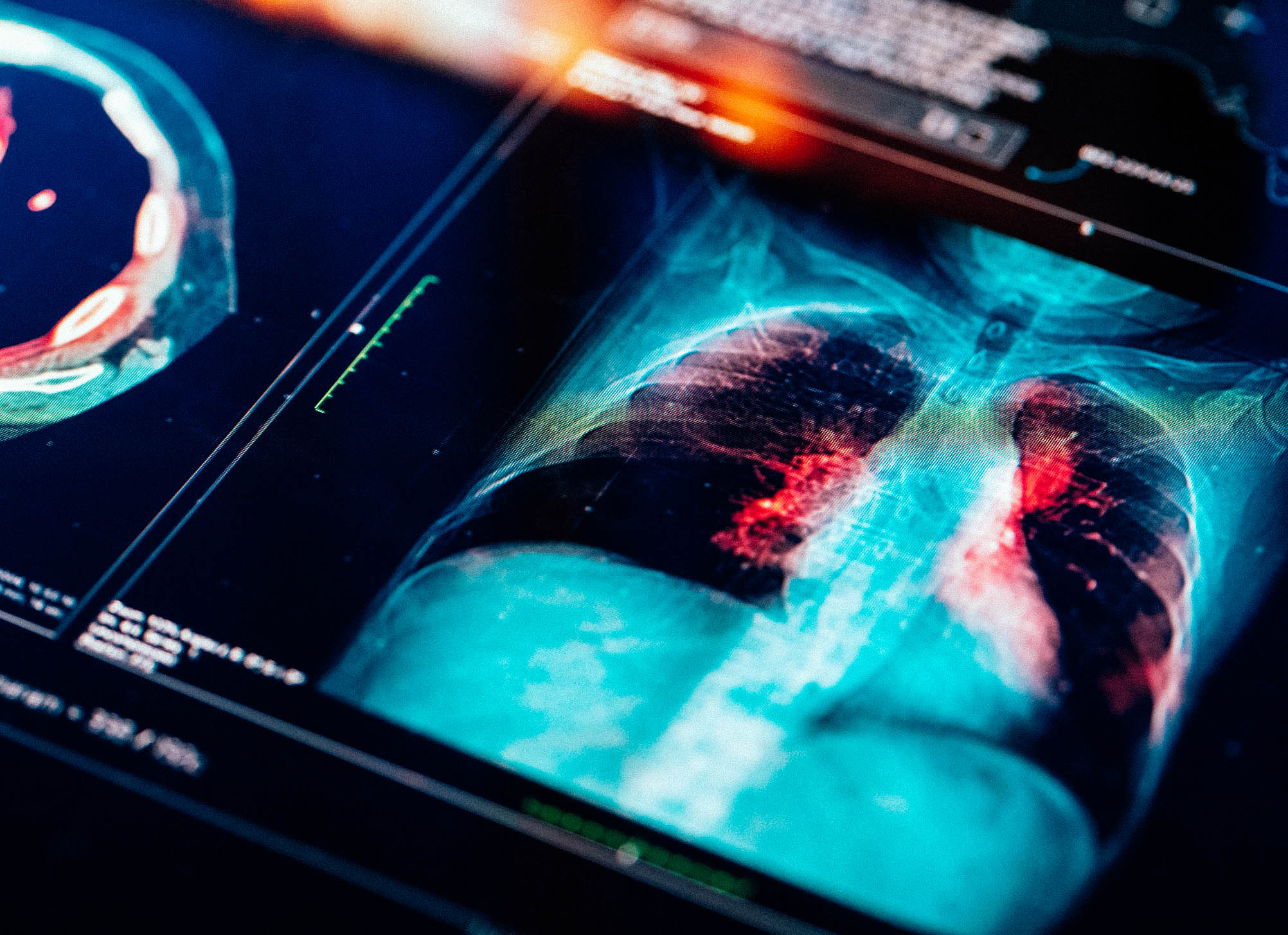
Researchers at the MOLIT Institute for Personalized Medicine are developing methods to analyze medical data and improve individualized cancer therapies.
They meet every week: around 20 experts from hospitals and medical practices in Baden-Württemberg. They work in genetics, molecular biology, oncology, pathology and radiology, to name just a few. Their meetings take place online, in the virtual tumor board VITU, a digital platform of the Heilbronn-based MOLIT Institute for Personalized Medicine.
And the focus is always on those who are not in attendance: cancer patients whose cases are discussed in the meetings. The aim is to develop the best possible therapy for each and every one of them. “For a hundred years, we have thought in terms of cohorts when developing therapies, reaching perhaps 80 percent of the population in the process,” explains Christian Fegeler, Professor of Medical Informatics at Heilbronn University of Applied Sciences. “Now we are focusing on the individual.” This approach of personalized medicine, also called precision medicine, represents a paradigm shift in the history of medicine.
MOLIT has existed since 2017. It was founded by physician and IT expert Prof. Dr. Christian Fegeler and oncologist Prof. Dr. Dr. Uwe Martens from SLK Clinics in Heilbronn. Both remain managing directors of the institute, which derives its name from the words “molecular” and “IT”.
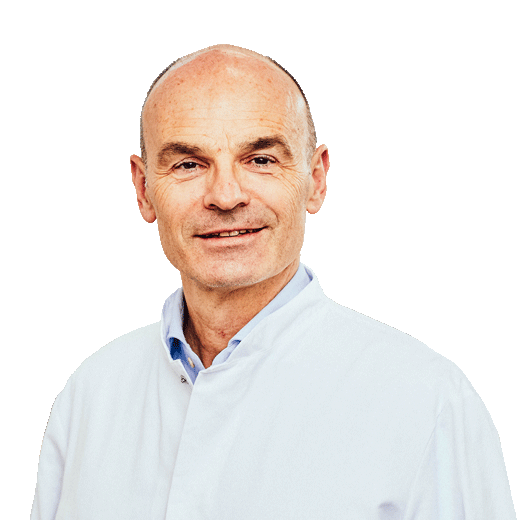
Prof. Dr. Christian Fegeler studied human medicine in Kiel and Aachen. After completing his doctorate at RWTH Aachen University and working clinically in intensive care and emergency medicine, he was responsible for the digital transformation in various hospital networks. Since 2008, he has been teaching and researching interoperability and digital processes in medicine as a professor at Heilbronn University of Applied Sciences. He is one of the founders of the MOLIT Institute for Personalized Medicine in Heilbronn.

At that time, Fegeler and Martens also launched the virtual tumor board VITU, thereby connecting experts from different disciplines. Their goal: the joint evaluation of molecular, genetic and clinical data of individual cancer patients. “This practical networking is really something special,” says Fegeler.
A prerequisite for this is that the data and the information are structured in such a way that they can be meaningfully combined. This is achieved using computer-based processes and artificial intelligence (AI) – methods and tools that are being developed at MOLIT, among other places. Interoperability is the key word here: It refers to the ability of a system, in this case the VITU platform, to exchange data in a structured and standardized manner across organizational boundaries and make it usable by everyone, regardless of which software generates or receives it. “It is important that we extract useful knowledge from the data,” says Christian Fegeler. “We evaluate cases from the specific perspective of a person suffering from cancer: Which genetic factors are relevant? Which treatment options appear useful? Are there any suitable studies for which the patient is eligible?”
Prof. Dr. med. Dr. h.c. Uwe Martens studied human medicine in Essen and Freiburg. After attaining his doctorate at the University Hospital of Freiburg and working clinically in internal medicine and gastroenterology, he served as a senior physician at the University Hospital and the Comprehensive Cancer Center (CCCF) in Freiburg and as managing senior physician at the University Hospital of Freiburg. He has been the clinical director of SLK-Kliniken Heilbronn GmbH since 2007 and a member of the executive board of the Heilbronn-Franken Cancer Center since 2010. Prof. Martens is a co-founder of the MOLIT Institute for Personalized Medicine in Heilbronn.
Data-driven medicine thus accelerates the path from basic research to individualized patient therapy and back again. This cycle of research, application and evaluation of therapeutic success is what characterizes translational medicine – an approach that has been intensively pursued at MOLIT since 2020 and will be further expanded in the future. According to planning, the new I³ Lab is to be completed by the end of 2027 – with funding from the Dieter Schwarz Foundation, the EU and the state of Baden-Württemberg. I3 stands for the combination of data science (in silico), molecular basic research (in vitro) and clinical application (in vivo).
A vivid example of this research approach at the MOLIT Institute is the cultivation of tumor tissue from patients in the laboratory. Because these cultures, known as organoids, are genetically identical, various drugs can be tested on them in the laboratory, the active ingredients of which have also been determined using AI, among other things. It can then be established whether the individualized therapy tested on the organoid can also help the patient in the hospital.
“Our motto is: ‘From bench to bedside’,” says Fegeler, “and ‘From bedside to healthcare system’.” Although medical research is developing at a rapid pace, not all people are benefiting from it yet. “The VITU tumor board currently reaches clinics and doctors’ practices in Baden-Württemberg, which care for around 20 per cent of the resident population,” says Fegeler, who hopes that VITU will also be used in other regions in the future. The specially founded MOLIT Service GmbH is already handling the distribution of the platform.
The healthcare system, however, is not yet prepared for the data-driven medicine of the future. “Let’s take the example of the electronic patient record: It was announced in 2015 and wasn’t widely adopted until 2025,” cautions Fegeler, comparing the race for digitalization to the construction of a tunnel. “Science and government start their work from either side and have to meet in the middle.” When asked who is currently closest to the center, he replies: “At the moment, I believe it’s science.”
At this research institution, which is funded by the Dieter Schwarz Foundation, scientists from various disciplines develop concepts for application-oriented personalized medicine and healthcare. The focus is on tailored, individualized therapies for cancerous diseases and their rapid translation into regular medical care. Together with its cooperation partners (the Heilbronn-Franken Cancer Center of SLK Clinics and the GECKO Institute for Medicine, Informatics and Economics at Heilbronn University of Applied Sciences), the MOLIT Institute brings together existing expertise in medicine and IT.
To harness the potential of high-performance computers, Hartwig Anzt from the TUM Campus Heilbronn develops and optimizes methods for solving mathematical equations. His goal: more efficient software.
read more
Countering feelings of powerlessness: Jan Ilhan Kizilhan explains how different cultures deal with traumatic experiences – and how different paths can lead to the same goal.
read more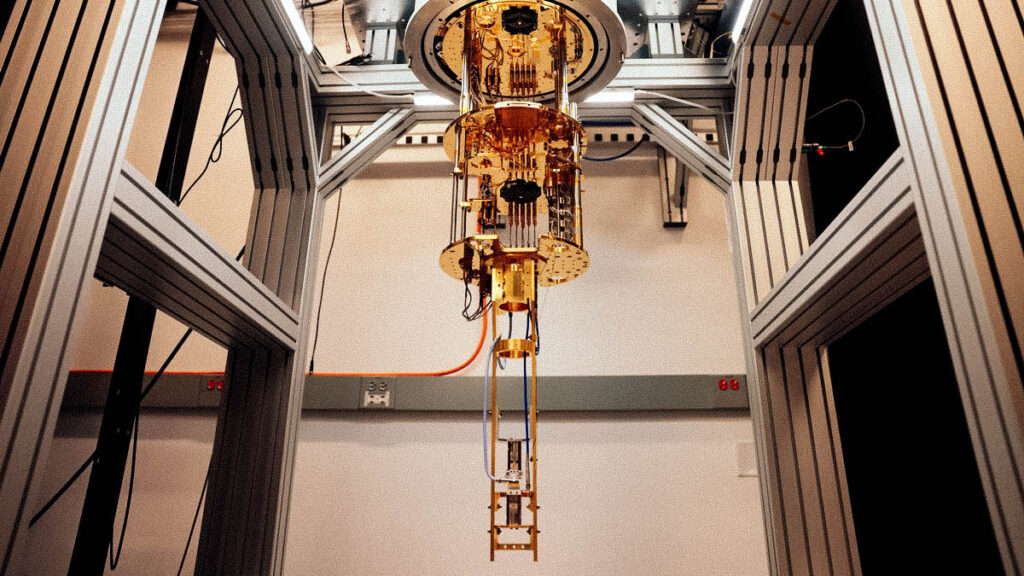
Quantum computers and artificial intelligence will augment each other in the future. Three theories by physicist Achim Kempf from the University of Waterloo in Canada reveal the potential of this synergy.
read more