Welcome to the world!
A very special welcome awaits newborn babies in the city of Heilbronn. But what is behind the friendly visits of the "baby ambassadors"? We spoke to Sophia Mayer from the family education center Haus der Familie.
read more
A third-grade class from Neubergschule Neckarsulm experiences a different way of learning at the experimenta science center. The children leave the “Bakery for the Senses” with much more than just their own baked goods.
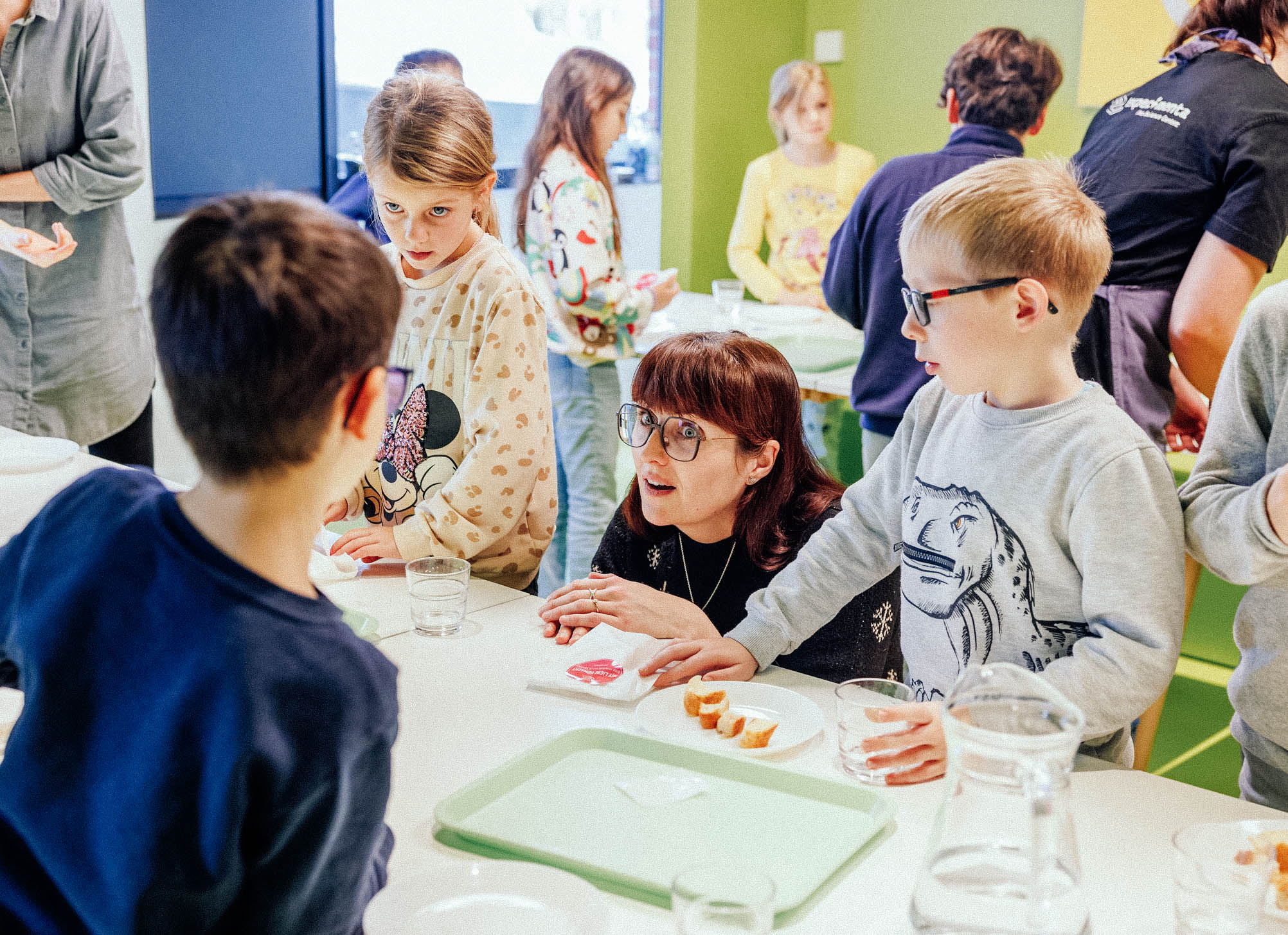
Pure anticipation fills the air this morning as 17 third-grade students from Neubergschule Neckarsulm arrive at the experimenta science center. “Today we are all bakers, researchers and detectives,” says Luisa Lenk, welcoming the class to the experimental kitchen. Before the children embark on their journey of discovery in the “Bakery for the Senses” workshop, the course instructor explains the most important rules. “First wash your hands, then put on your aprons and disinfect your hands.”
The children gather around the tables, where flour, oil, baking powder, quark and sugar are laid out for them. But their attention is soon drawn to the “secret ingredients” noted on the recipes: cinnamon, lemon, orange and vanilla. “Please don’t reveal what is on your pieces of paper,” Lenk cautions with a smile and adds: “Later, we’ll guess who has which secret ingredient.”
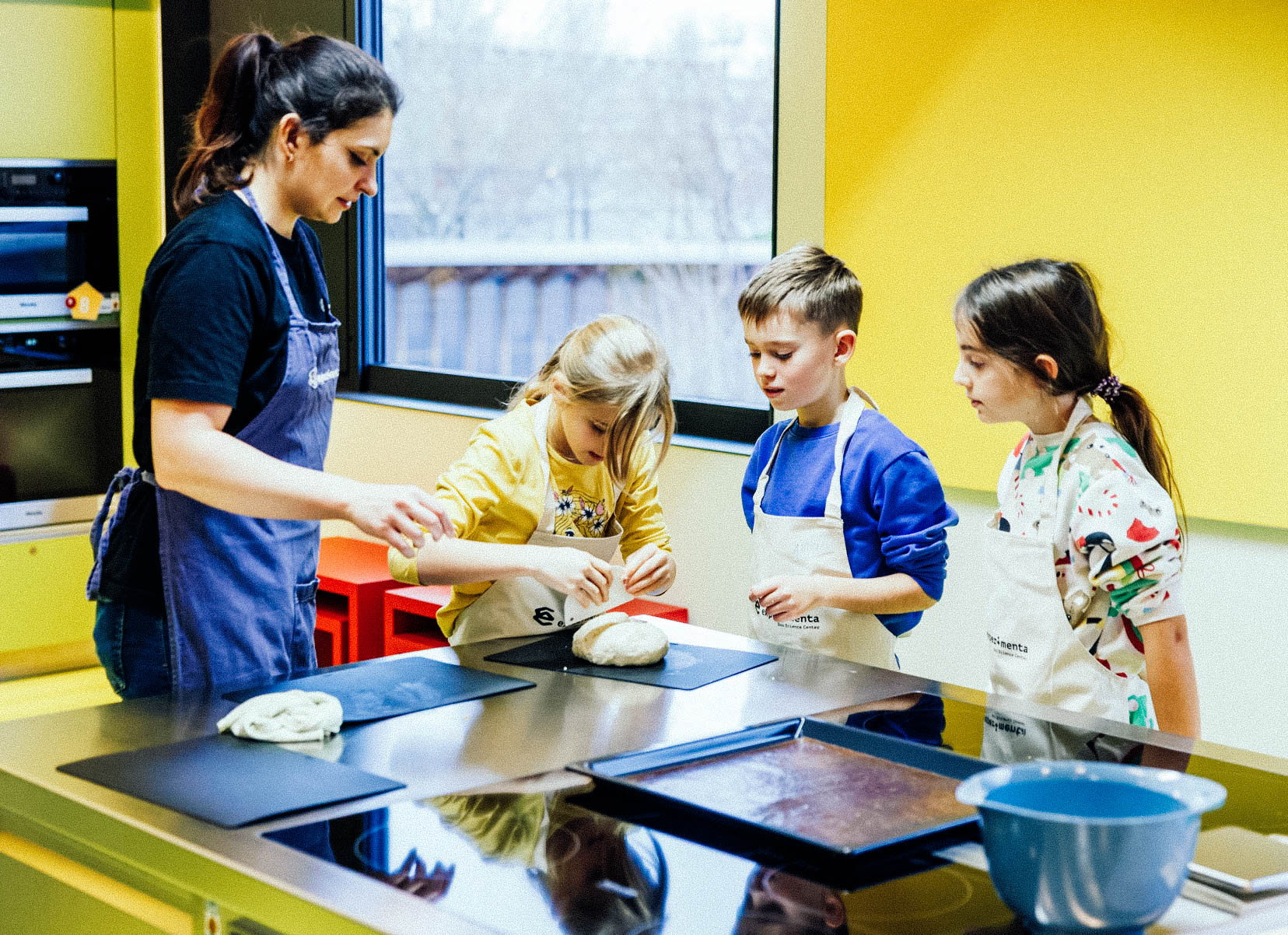
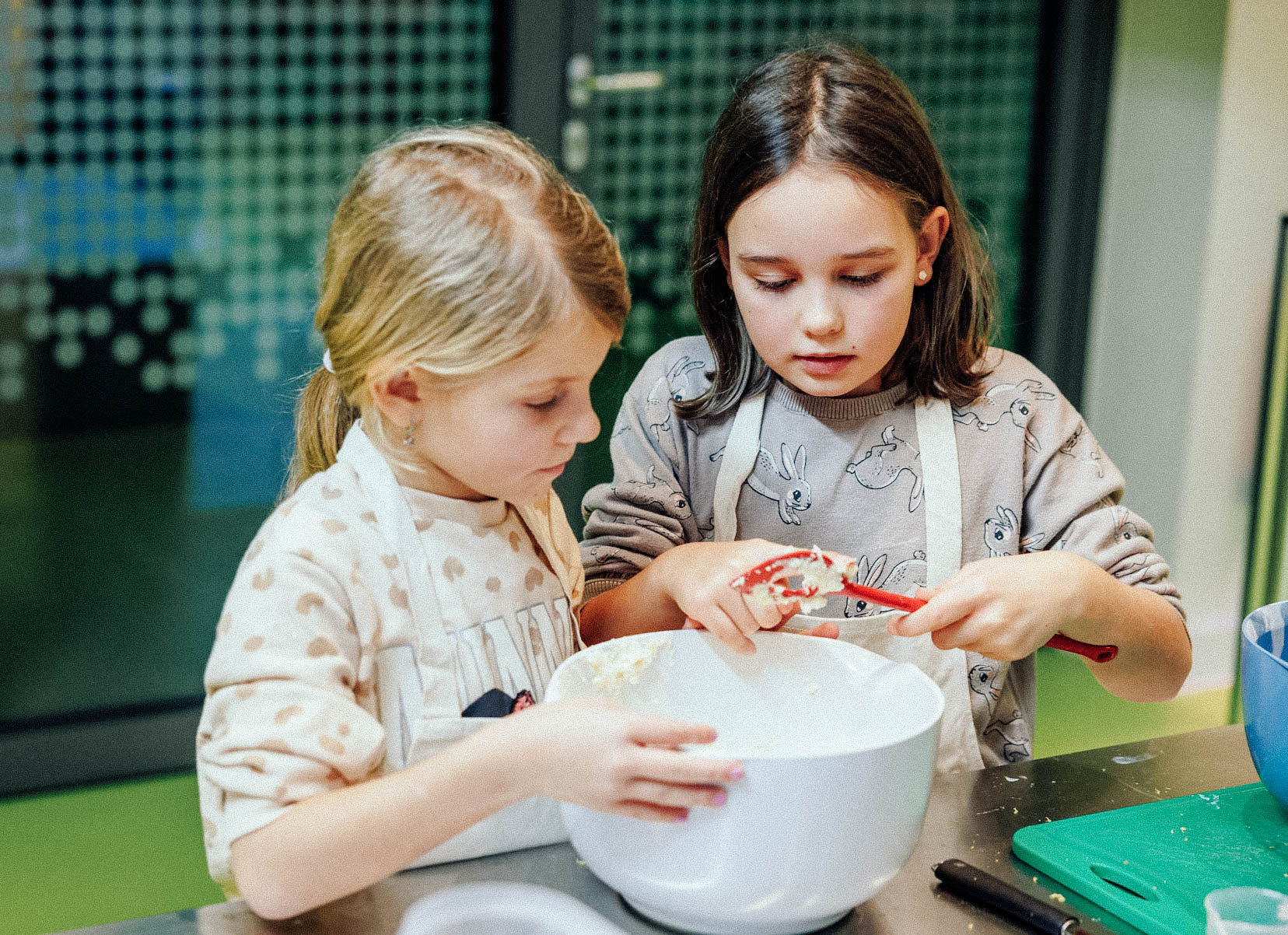
Once the initial excitement has subsided, the children get into teams. Isak and Farith are in one group. They put their heads together, carefully read the recipe and mix the ingredients. “You’re doing a great job,” Lenk praises. Then they knead and shape the dough. Isak and Farith need several attempts before their quark braid is just right. “That’s all part of it. Here, the children can simply keep trying until it’s right” says Lenk, adding to the two boys: “And if you make mistakes, that’s OK. That’s how you learn the most.”
Those who have finished making their braids are allowed to use the leftover dough to bring their own creative ideas to life. “You can take those home with you,” says Lenk, asking the groups to slide their baking trays into the preheated ovens.
While the braided dough and the children’s own creations bake at 160 degrees for 25 minutes, Lenk tells the children and their teacher Lea Bonomo about the other laboratories at experimenta. “In addition to the experimental kitchen, you can do research in chemistry, biology, physics or technology labs, program robots or conduct a DNA analysis with test tubes and pipettes. We also have a Science Dome, which is a combination of a theater and a planetarium,” Lenk tells the fascinated children.
Children and young people can take around 70 laboratory courses here and thus become researchers themselves. The program covers many topics from the Baden-Württemberg curriculum, providing ideal conditions for deepening learning content in a practical way. “We want to support all children – regardless of their academic level,” the course instructor explains to the teacher. “And with our programs and materials, we also support teachers in designing special lessons.”
Bonomo nods. She has been to experimenta with her school classes many times before. “All my colleagues think the program is really good,” she says. The children are equally enthusiastic. “I definitely have to come here with my parents,” exclaims Elaina.
experimenta is a recognized extracurricular learning center offering hands-on science experiences for all age groups. In Germany’s largest science center, visitors of all ages can explore science, technology and everyday phenomena across more than 25,000 square meters. There are more than 275 interactive stations, lab courses, a unique Science Dome and an observatory to choose from. True to the principle that “experience creates knowledge”, visitors can discover and hone their own specific skills.
experimenta offers a special program for school classes called the World Program, which covers topics such as sustainability and choosing a course of study or career. The program also includes visits to the interactive exhibition, the laboratories and the Science Dome. Teachers take their class on a journey of discovery. The students not only engage intensively with a topic, but also gain shared experiences and work together as a team. This strengthens their sense of community. The experimenta team provides individual support to the teachers in school communication – from the initial planning and accompanying materials to tailor-made programs.
The main driving force and sponsor behind experimenta is the Dieter Schwarz Foundation. The science center places a clear focus on education and science – especially in the fields of natural sciences, technology and digitalization. By supporting experimenta, the Foundation aims to inspire young people about these topics.
Meanwhile, the scent of freshly baked quark braids spreads through the kitchen. Before the baked goods are taken out of the oven, Lenk invites her little scientists to take part in a sensory workshop. The instructor hands out butter cookies. “Look at the cookie. What does it look like, how does it feel? Break it in half! Can you hear it snap? Does it smell like butter? And now: taste it slowly.” The children touch, sniff and nibble. “It tastes sweeter with your eyes closed,” exclaims Ellsa. Anton says: “Mine smells like vanilla.” Lenk encourages them: “You have so many senses, use them all. You will see: This is how you discover things you would otherwise miss.”
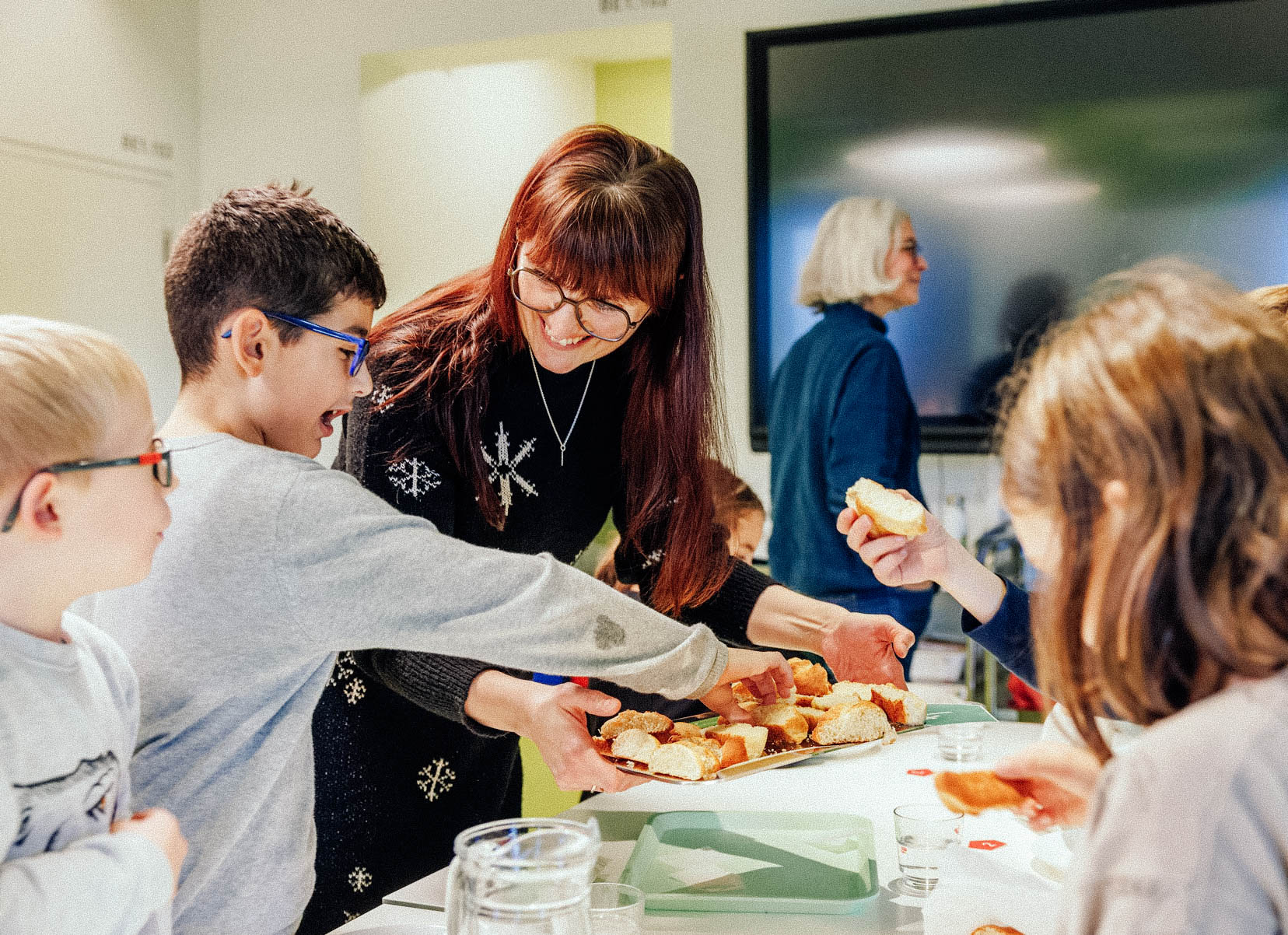
Then, finally, the children’s own baked goods are ready. The children present them one after the other, and everyone gets to have a taste. “First look, then feel, break apart, smell – and finally taste,” Lenk reminds them, before asking the crucial question: “Who can guess the secret ingredient?” Ellsa immediately shouts: “This one smells like pancakes. There’s vanilla in it.” Elaina closes her eyes and chews slowly: “I think it’s lemon.” Isak guesses cinnamon. Anton calls out: “You can taste orange right away; it’s a little bitter.”
The children are still in the middle of tasting and guessing when Dr. Franziska Lang, managing director of experimenta, stops by the experimental kitchen. She asks to see the results and praises the children’s creativity and intuition: “Today you didn’t just bake, you explored with all your senses. That’s exactly what we want encourage at experimenta: that you experience how exciting your own actions and discoveries can be.” Course instructor Lenk adds: “I’m always impressed by how the children flourish when they’re allowed to work with their hands – and how proud they are when they get to hold their own ‘works of art’ at the end.”
After three hours, the students pack up their creations – and take home much more than just delicious baked goods. “I’ll let my sister guess what’s in it,” says Anton mischievously. And Farith raves: “This was really great. I had no idea you could learn so much with your senses.”