Skip to content

Improving Financial Literacy

Savings, insurance, building a financial cushion: “Haus der Familie” is offering a lecture series on finances. The target audience: women. Why talking about money can be a smart idea.

10.09.2026
Ursula Barth-Modreker

I

Is my child ready to move up from baby cereal to vegetables? Are wooden toys better than plastic ones? Should I send my child to daycare or a childminder? Many young parents rack their brains trying to figure out how to raise their children in the healthiest and safest way possible. One parent—usually the mother—typically reduces their working hours to provide the best possible care for the child. That parent’s income decreases, as do their future pension entitlements, while the family’s costs increase. And despite all of this, one topic still tends to get sidelined in families: financial planning. “Parents make sure their children are eating right, that they’re being raised properly, that they’re supervised when the parents are busy, and that they get an education. But the family’s finances and financial security are often neglected,” says independent financial advisor Annika Peters. This is particularly detrimental to women, who often have to accept financial sacrifices to take on the workload of caring for children.

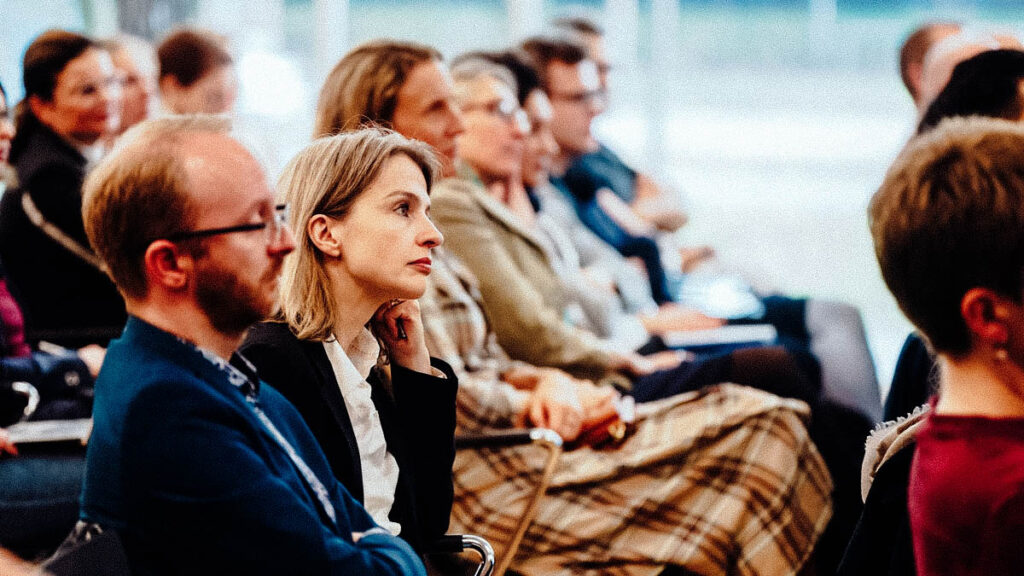
The nearly 40 women who signed up to hear the managing director of Stuttgart-based FrauenFinanzBeratung speak this Wednesday evening want to improve that situation in their own lives. They registered for the online lecture “Familie – und jetzt? Finanzielle Absicherung für den Nachwuchs” (“Family—Now What? Financial Security for the Next Generation”) at Haus der Familie Heilbronn.The six-part online lecture series, “Finanzplanung für Frauen” (“Financial Planning for Women”), was jointly organized by Haus der Familie, the City of Heilbronn’s women’s affairs officers, the Frauenrat Heilbronn (Heilbronn Women’s Council), and the employment agency. The goal was to encourage women to take control of their lives and achieve financial independence.

And the lecture series has been hugely popular: Nearly 900 women have already attended. “Financial education has long been an integral part of Haus der Familie’s program. Some of the events we offer place a specific focus on women in an effort to bolster their financial autonomy, independence, and security,” explains Dr. Sylvia Klinge, head of the department.

Dr. Sylvia Klinge

Dr. Sylvia Klinge, Department Head at the Haus der Familie: “In some cases, we specifically focus on women in order to strengthen their financial autonomy, independence, and security.“

Ein Portraitbild von Sylvia Klinge

148,000 euros per child

“Financial planning is life planning,” emphasizes Annika Peters, who is hosting the lecture series alongside her two co-managing directors, Yvonne Preisach and Dr. Verena Stephan. After all, every life decision has financial implications—including the decision to have a child. The goal of today’s lecture is to help mothers, in particular, learn how to plan ahead when it comes to investments, retirement savings, and health and accident insurance, in order to ensure that their children get off to a good start in life.

Some of the figures are sobering: Who would have thought that raising a child to the age of majority costs an average of 148,000 euros? According to Peters, these costs collide with the reality that many women work part-time while raising a family, so they are earning even less. And financial planning is especially important for these women in particular, Peters emphasizes.

Women often put their careers on hold while taking on caregiving responsibilities. The financial disadvantages can be offset—if you know how.

How can I protect my family from life’s ups and downs? How can I save and invest money for my children? And how do I manage to turn a 500-euro gift for a newborn into nearly 9,900 euros by the time the child turns 18? In her one-and-a-half-hour presentation this evening, Peters shares practical knowledge; explains the trade-offs between returns, security, and liquidity in financial investments; helps attendees develop a keener eye for risks; and sheds light on unnecessary insurance policies. Her most pressing advice: “Invest money to get the most out of it for your child!”

Providing financial compensation for care work

The presentations also cover retirement planning in detail. “On average, women receive a pension of 930 euros. And things can get a little tight if they want to take their grandchild out for ice cream on that kind of money,” Peters says. She is illustrating the age-old female dilemma: Women spend a lot of time taking care of others—first their children and the household, and later their elderly parents. And in so doing, they often neglect themselves. “This discrepancy has to be taken into account in family financial planning, and care work needs to be financially compensated,” Peters urges.

Katrin von Löwenstein, managing director of the Heilbronn employment agency, also emphasizes that women should be financially independent. “Every day at our organization, we see time and again how important a sustained employment history is for financial security. Employment bolsters economic autonomy, opens up career opportunities, and lays the foundation for independent retirement planning,” von Löwenstein says. The lecture series is intended to encourage women to take an active role in shaping their financial future.

A catalyst for change

The talks seem to be hitting the mark with audiences; some of the participants are brimming with enthusiasm afterward. “The presentation ‘Versicherungsschutz in jeder Lebensphase’ (‘Insurance Coverage at Every Stage of Life’) a little while back prompted me to review and adjust our family’s existing policies,” says Annika Kantenwein, a mother of three. The dietitian listened intently to the advice provided in the presentation—and then sat down with her husband afterward to talk about their finances.

For Kantenwein, the lecture series served as a “strong impetus” to bring her knowledge of insurance and finance up to date. And she immediately recommended it to several of her female friends. “The speakers made great use of the presentation time, delivering engaging talks with a wealth of expertise, and sharing a huge amount of interesting information,” Kantenwein says, summarizing her experience. For the women who attended, it was an early evening well spent.

About Haus der Familie

Haus der Familie is a non-profit family education center that provides a place for learning, meet-ups, support, and advice in Heilbronn and the surrounding area. Its primary aim is ensuring that children get off to a good start in life and providing families with valuable support. For example, Haus der Familie offers around 1,000 courses per year, which are attended by 15,000 participants. These range from preparation for childbirth and support in the first years of life to projects promoting work-life balance, such as company childcare during school vacations, and services for families in special circumstances. In addition, Haus der Familie is committed to promoting financial literacy among families—with its free “Financial Planning for Women” lecture series, for instance.

In the future, Haus der Familie plans to change its target audience twice a year: The focus will be on women half the time, and on the whole family the other half. Courses for families will help parents learn how to teach their children to handle money responsibly, for instance. Alongside typical finance issues, courses cover legal issues related to parents’ financial benefits and entitlements.

Haus der Familie receives much of its financing from the Dieter Schwarz Stiftung (Dieter Schwarz Foundation), as well as from course fees and project funds.

Similar articles

Show all

Searching for traces in the experimental kitchen

A third-grade class from Neubergschule Neckarsulm experiences a different way of learning at the experimenta science center. The children leave the "Bakery for the Senses" with much more than just their own baked goods.

read more

Welcome to the world!

A very special welcome awaits newborn babies in the city of Heilbronn. But what is behind the friendly visits of the "baby ambassadors"? We spoke to Sophia Mayer from the family education center Haus der Familie.

read more

“The learning concept is brilliant because it’s so practical”

No teachers, no lectures, just project work: the 42 Heilbronn coding school is training the programmers of tomorrow. Two students and their managing director share their experiences.

read more
;