A plan for the future
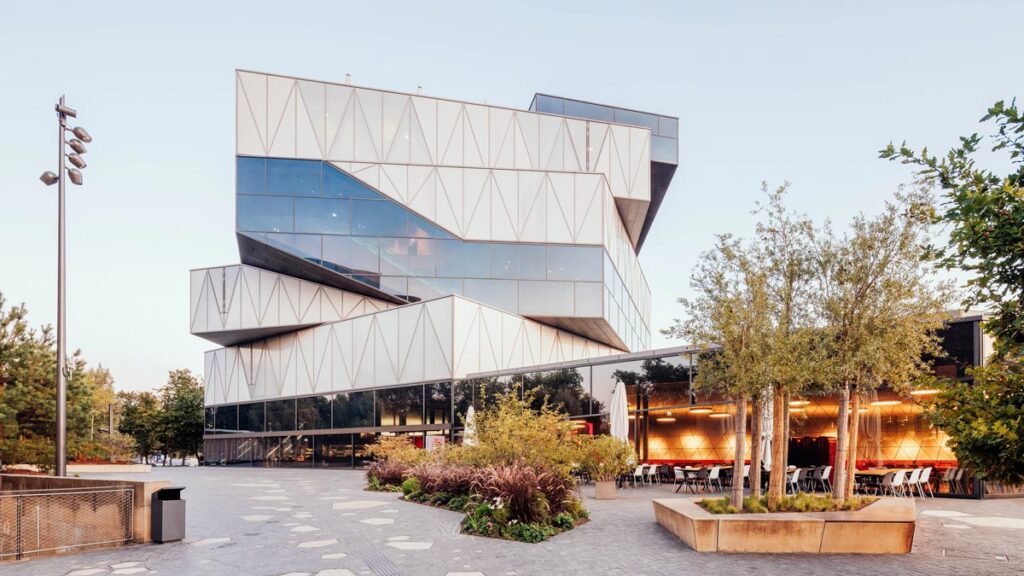
Heilbronn is rapidly transforming from an industrial city into a place committed to education, research and innovation.
read more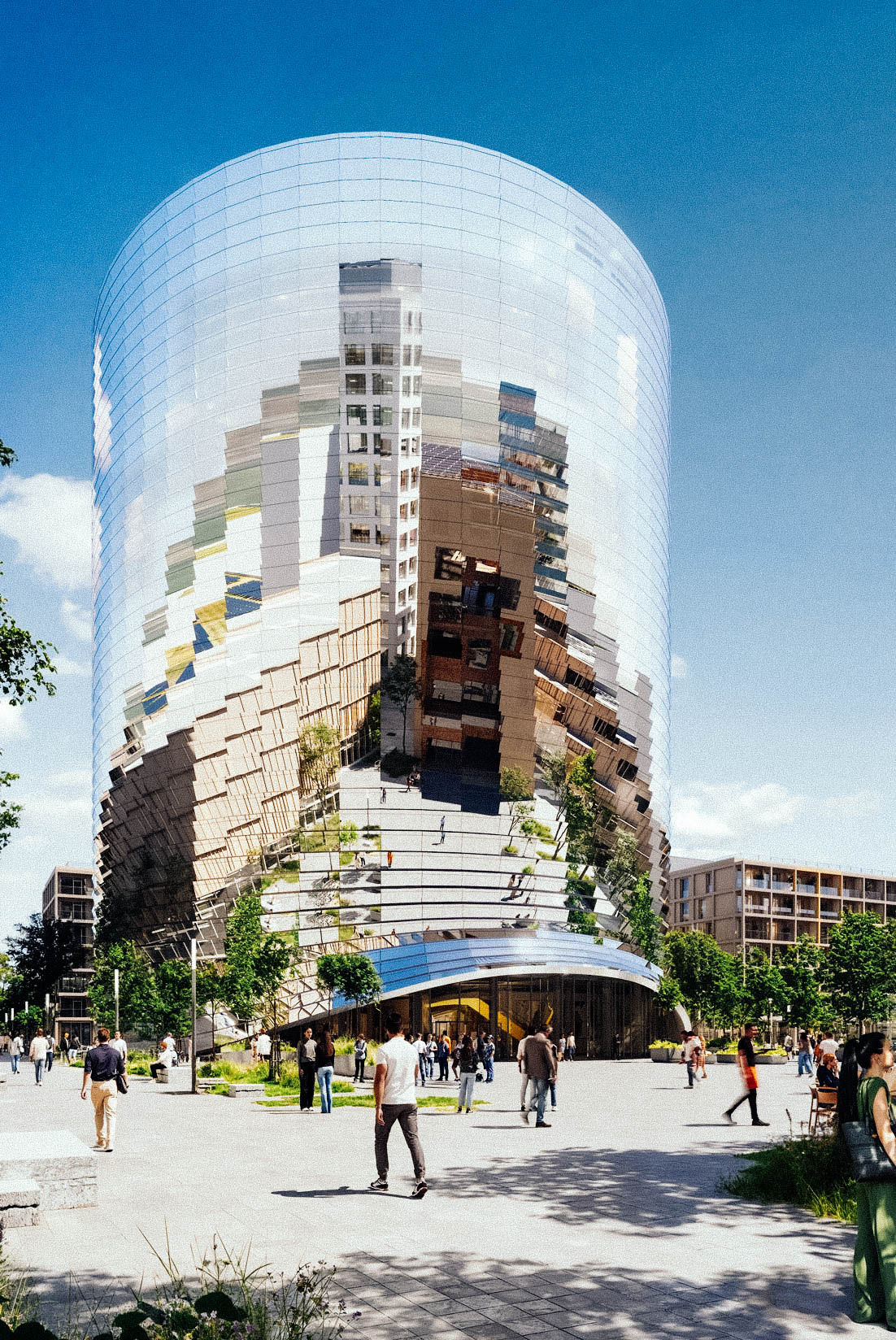
IPAI is creating a new hub for European artificial intelligence in Heilbronn. The aim is to combine technological excellence with social responsibility.
On October 21, 2025, the day has finally come. With spades in hand, officials gather in a semicircle around a symbolic pile of sand: Federal Chancellor Friedrich Merz, Federal Minister of Research Dorothee Bär, Federal Minister of Digital Affairs Karsten Wildberger, Winfried Kretschmann, the minister president of Baden-Württemberg, with State Minister Nicole Hoffmeister-Kraut (Economy) and State Minister Thomas Strobl (Interior), as well as the Mayor of Heilbronn, Harry Mergel.
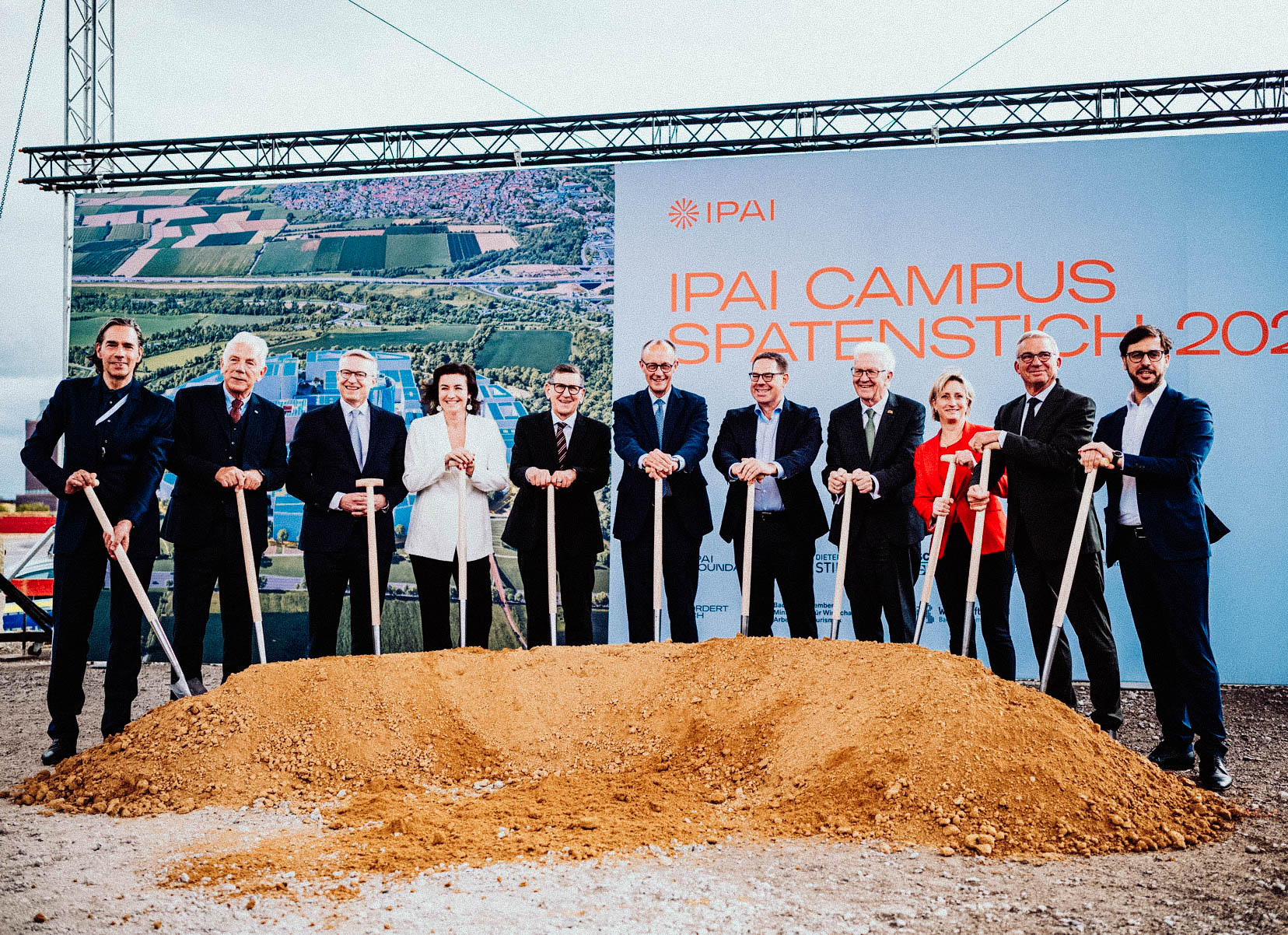
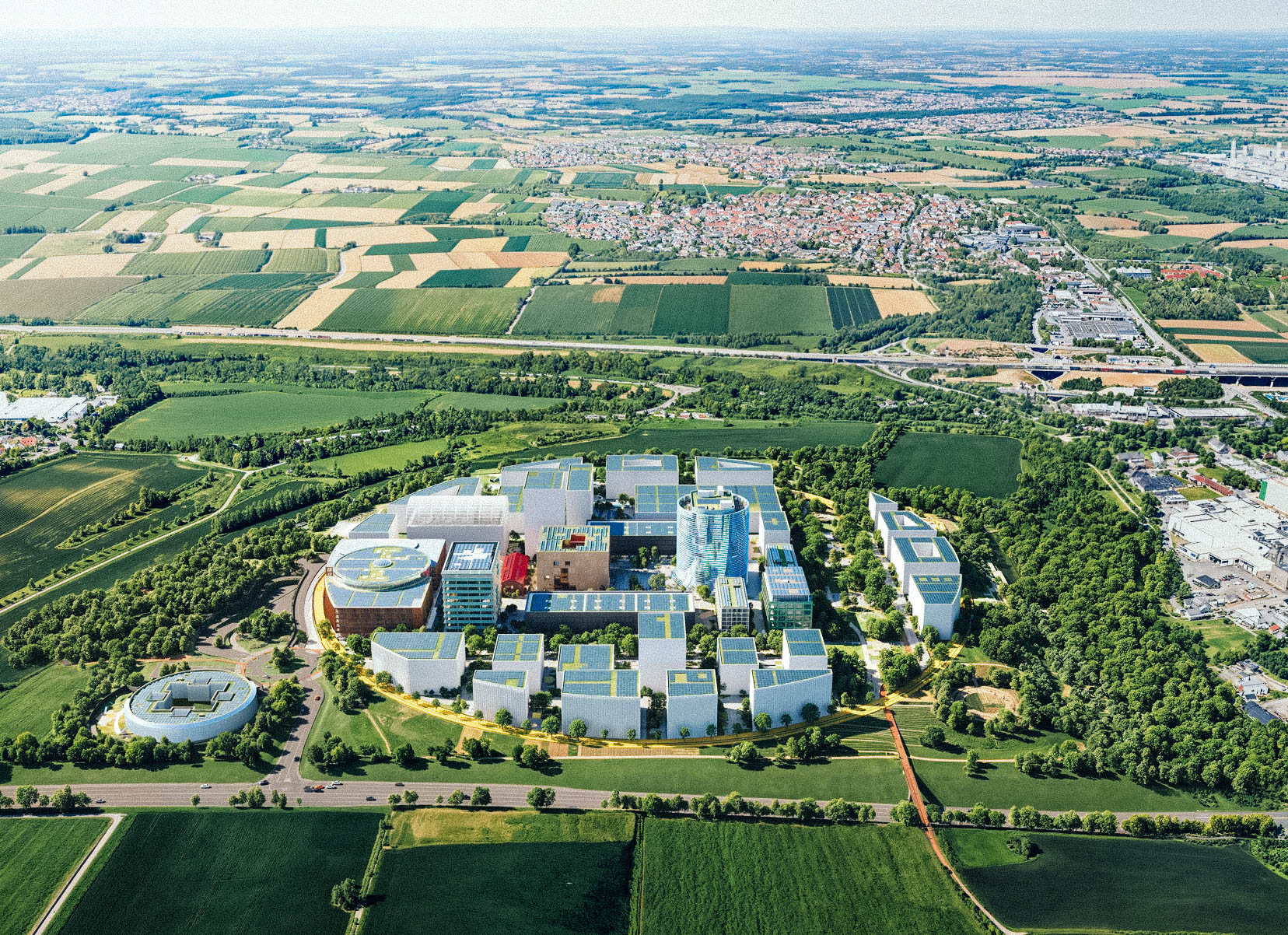
The high-profile attendees at this groundbreaking ceremony demonstrate the regional and national significance attached to the new IPAI CAMPUS. Here, in the north of Heilbronn, a site of unprecedented innovation is being created on 30 hectares; 5,000 people are set to be working on the development and application of artificial intelligence (AI) in living labs, data centers, and research and work spaces at the IPAI CAMPUS.
The number of shovels used at the groundbreaking ceremony can also be seen as being a symbol. A symbol that we will only find success by working together. A symbol that Germany must combine all of its strengths if it wants to become a technology leader in the field of AI. So far, too little has been done in this regard, the federal chancellor said in his speech. “In Germany, we do excellent basic research and have a research landscape that sets global standards. At the same time, our country has an industrial base and economic substance that is renowned worldwide for its outstanding quality,” says Friedrich Merz. “But what we have not yet sufficiently succeeded in doing is to combine these two strengths.”
This has been the goal of IPAI since 2022. Initiated by the state of Baden-Württemberg, the Dieter Schwarz Foundation, the companies of the Schwarz Group, and the city of Heilbronn, the innovation platform is driving forward the diverse applications in the field of artificial intelligence—in the economies of Baden-Württemberg, Germany, and Europe. The platform offers a wide range of support services tailored to the direct implementation of AI solutions. This includes specialized AI services and consulting on strategic implementation, supplemented with targeted workshops and maturity level assessments. For technical applications, a sophisticated AI suite is available that enables the development and networking of company-centered AI infrastructures. In the future, the package will be rounded off by providing powerful cloud technology and computing power, as well as accompanying research for the development of reliable and human-centered AI solutions.
IPAI helps organizations with their AI transformation—in a collaborative, hands-on, and integrative way. The vision is to build an application-focused AI platform for innovation and collaboration that is based on European values.
As a centralized hub, IPAI bridges the gap between excellence in research and practical application by creating an open ecosystem with a diverse range of services and programs tailored to the needs of companies and institutions for the joint development of innovative and responsible AI solutions.
At the heart of this vision is the IPAI CAMPUS. On a 30-hectare site in the north of Heilbronn, IPAI is creating the infrastructure needed to forge its own European path in AI. Construction of the campus, which will eventually provide space for 5,000 people working in the development and application of AI, will begin at the end of 2025, with the first buildings ready for occupancy by the end of 2027.
The initiators of the IPAI platform include the state of Baden-Württemberg, the Dieter Schwarz Foundation, the companies of the Schwarz Group, and the city of Heilbronn.
However, the real value that IPAI provides is the creation of an interdisciplinary community of researchers and companies. From Audi to Aleph Alpha, from Böpple construction company to savings and loan Schwäbisch Hall, from Fraunhofer Institute to VfB Stuttgart: the IPAI community already has more than 80 members and partners. Targeted matching initiatives ensure that those who are compatible—i.e., who can support or complement each other—are brought together.
The construction of the IPAI CAMPUS is intended to give the community a new home. And a very special one at that: in keeping with the collaborative approach, the architecture of the campus grounds also embodies openness and exchange. Versatile buildings, flexible spatial structures, transparent facades, and open spaces characterize the design by the architectural firm MVRDV. The result is a public space that invites everyone to linger, which is why playgrounds, sports fields, cafés, and restaurants are also planned.
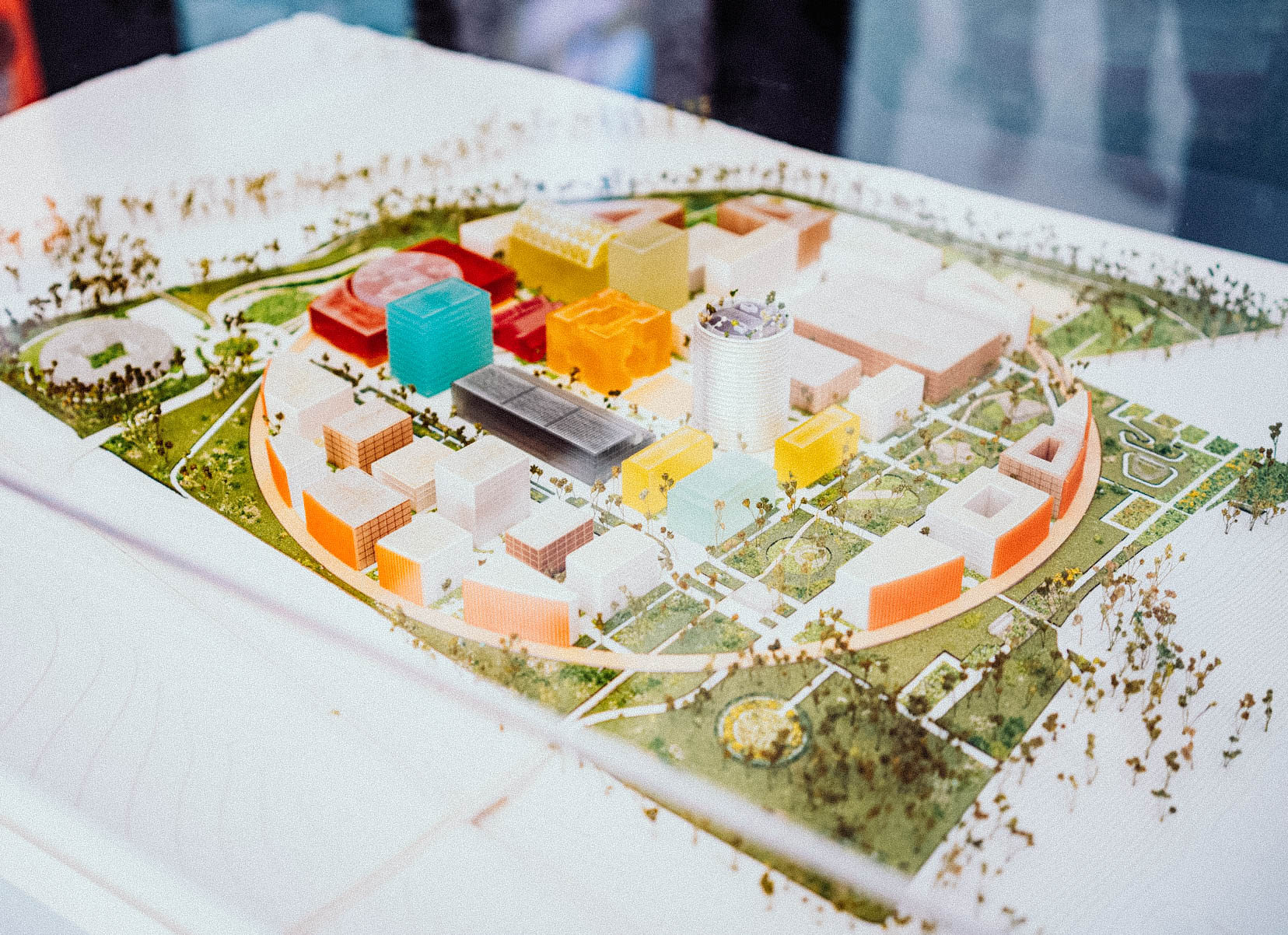
The architecture reflects the vision of IPAI. After all, according to the IPAI website, this is where “The Global Home of Human AI” is being created. Human-centered artificial intelligence is an important keyword in the context of AI “made in Europe.” The technology is not intended to compete with humans, but rather to support us in the best possible way with results that are transparent and understandable. It is, if you will, a trustworthy collaboration between humans and AI.
IPAI emphasizes its ethical and social responsibility, which includes responsibility to the climate and the environment. This commitment is also clearly evident in the architectural firm’s design. Green spaces, photovoltaics, rainwater harvesting, and recycled materials are all part of the campus’s basic features. In addition, the entire site has been designed to be car-free. Visitors will be able to get around on foot, by bike, e-scooter, or monowheel—a motorized vehicle with only one wheel.
Humans or machines? Progress or restraint? Climate protection or economic growth? Anyone who has previously thought in terms of such opposites will be proven wrong by IPAI. Because here, things are not thought of in terms of opposites. It is about collaborative models in which the capabilities of humans and AI complement each other. Chancellor Friedrich Merz is also convinced that this approach will lead to success for Germany and Europe: “We have everything we need to become winners in this fourth major industrial revolution, the AI revolution,” he emphasized at the end of his speech. He said he would be “following with great curiosity and excitement to see how much can be achieved over the next few years at this site.”
Heilbronn is rapidly transforming from an industrial city into a place committed to education, research and innovation.
read more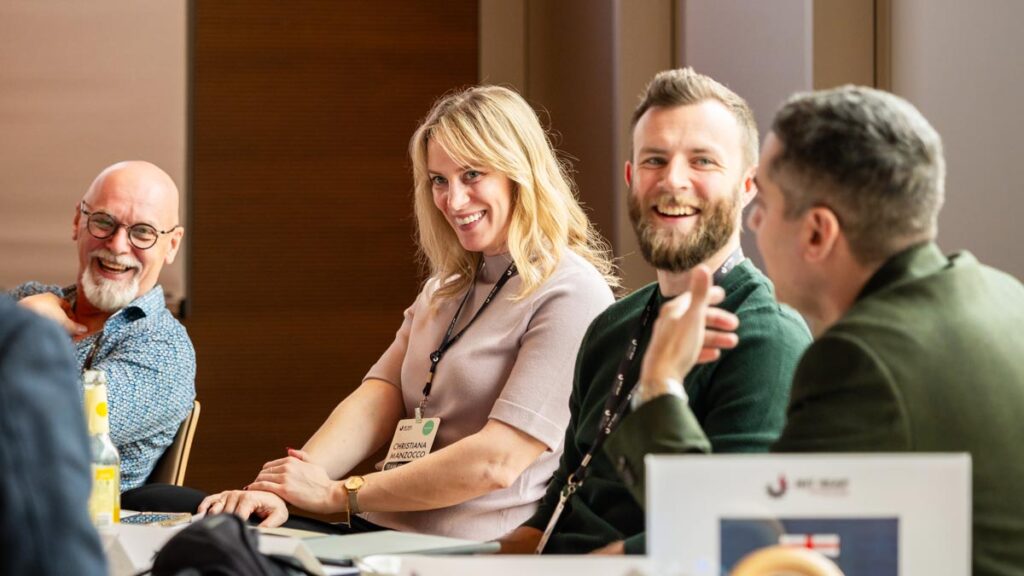
The Heilbronn-Franken region has the ideal prerequisites for becoming a global AI hub. The MIT REAP program supports all stakeholders in seizing this opportunity.
read more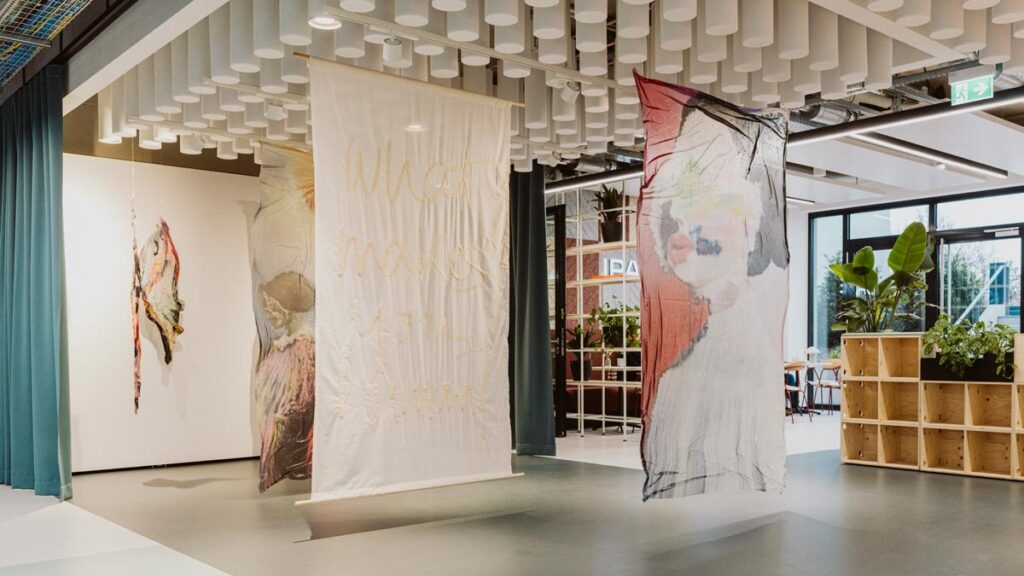
In its exhibitions, the IPAI Foundation presents artificial intelligence in a very special light. The artworks, generated in collaboration with AI, make the connection between art and technology tangible.
read more