Skip to content

Artistic intelligence

In its exhibitions, the IPAI Foundation presents artificial intelligence in a very special light. The artworks, generated in collaboration with AI, make the connection between art and technology tangible.

05.05.2026
Ebba Schröder

A

Artificial intelligence is abstract. You cannot touch it; it is difficult to grasp. And, consequently, many people remain distant from the technology: the hype is paired with skepticism. The IPAI Foundation wants to change that. It aims to break down barriers and strengthen trust in the technology – while at the same time fostering a differentiated dialog about AI in society.

Art plays an important role in this. In the IPAI Living Room, the public AI center for visitors to IPAI SPACES in Heilbronn, works created by international artists in collaboration with artificial intelligence are regularly exhibited across an area of around 1,000 square meters. “With this artistic, often poetic approach, we connect with people on an emotional level,” explains Head of AI Engagement and Literacy, Constanze Zawadzky. “Here we show selected works that inspire viewers to think and reflect.”

About the IPAI Foundation

As a non-profit organization, the IPAI Foundation complements the AI innovation platform IPAI and is supported by the Dieter Schwarz Foundation. It addresses the question of how we can generate social and technological progress around the topic of human-centered artificial intelligence (AI). The Foundation thus makes an important contribution to the shared vision of shaping the “Global Home of Human AI” in Heilbronn.

The IPAI Foundation focuses on strengthening trust in the technology, empowering people to interact with AI and fostering a differentiated dialog about AI in society that inspires people to embrace AI and the future. Its priorities are twofold: contributing to the science and transformation of AI and promoting active dialog and knowledge acquisition.

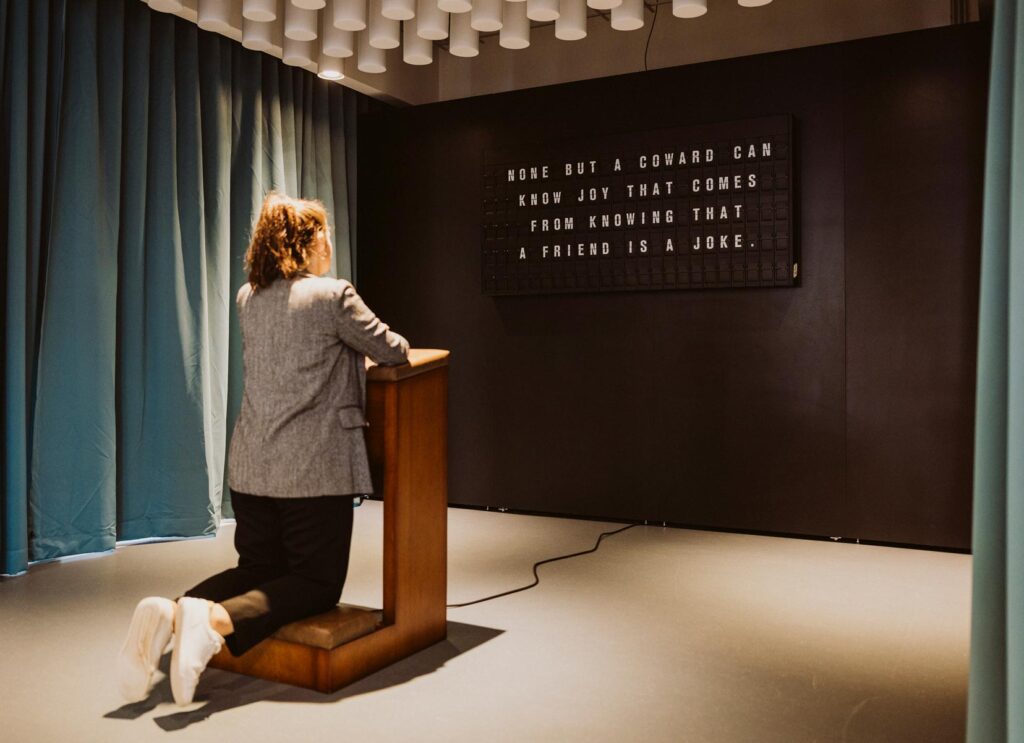
Poetic. Emotional. These words are certainly true of Mario Klingemann's work "Appropriate Response" (2020). It consists of a split-flap display, as is commonly found in stations and airports. But instead of information on departure times, viewers are presented with AI-generated messages, for which Klingemann trained the neural network GPT-2 with 60,000 quotes and aphorisms. To receive a personal message, you kneel on a bench – a religiously connoted gesture that can be associated with hope, but also with fear. What message might artificial intelligence have for me?
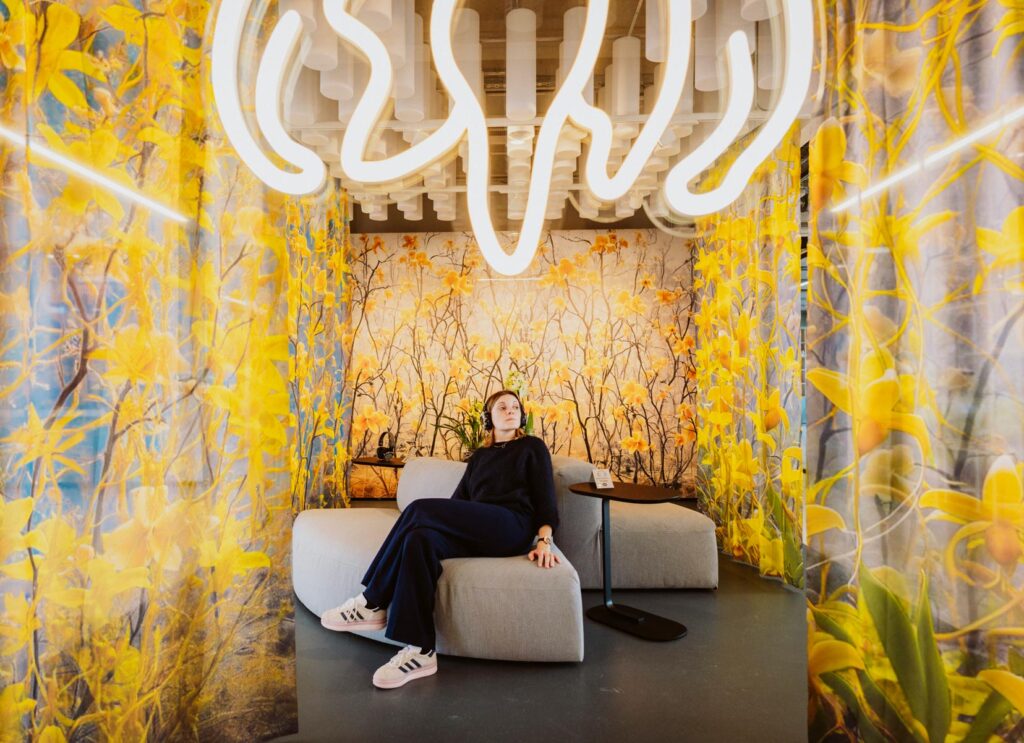
From January 14 to April 21, Gretta Louw's installation "Each Trailing a Dreamworld", in which the Australian artist explores the complex, many-faceted nature of the orchid, is being exhibited in the IPAI Living Room. A sound installation forms the heart of the work. For this, Louw trained an AI system with specially curated texts and numerous precise prompts. The process involved a back-and-forth between the artist and the AI until the final result was achieved. The result is a lyrical text – sometimes read out by the artist, sometimes by the AI – that draws the audience into the material and metaphorical world of the plant. "Working with AI is a lengthy dialog with the unknown," explains Louw. "You move between the constant disappointment with the inconsequential and the unexpected moments when something suddenly opens up – moments of joy that arise from the unpredictable, the hallucinatory."
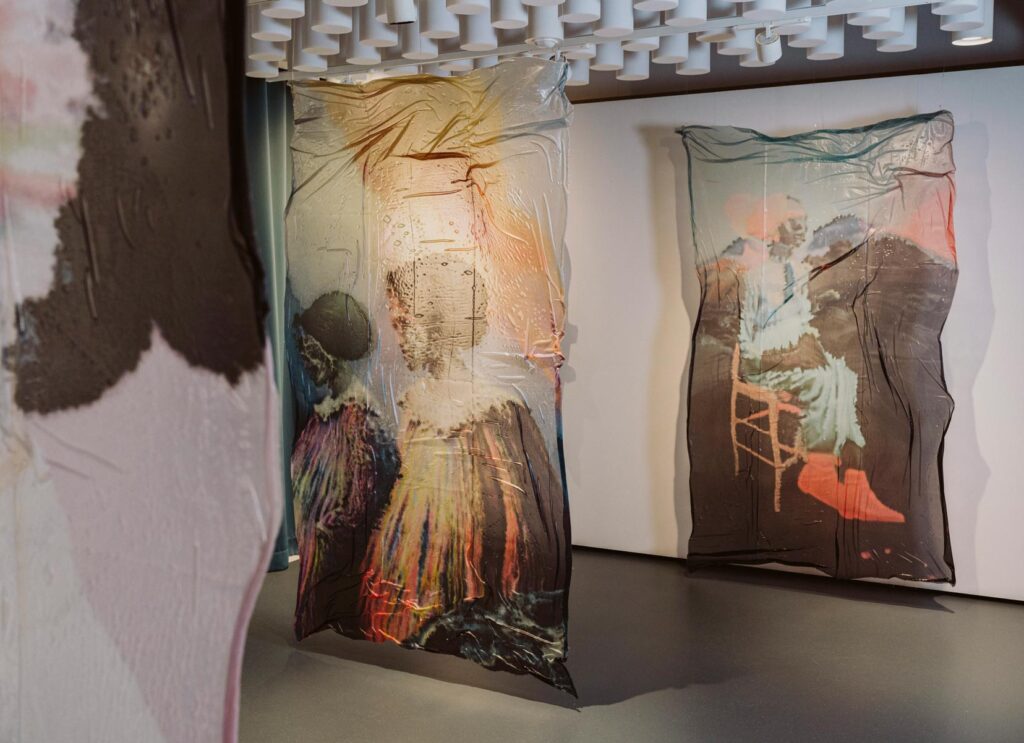
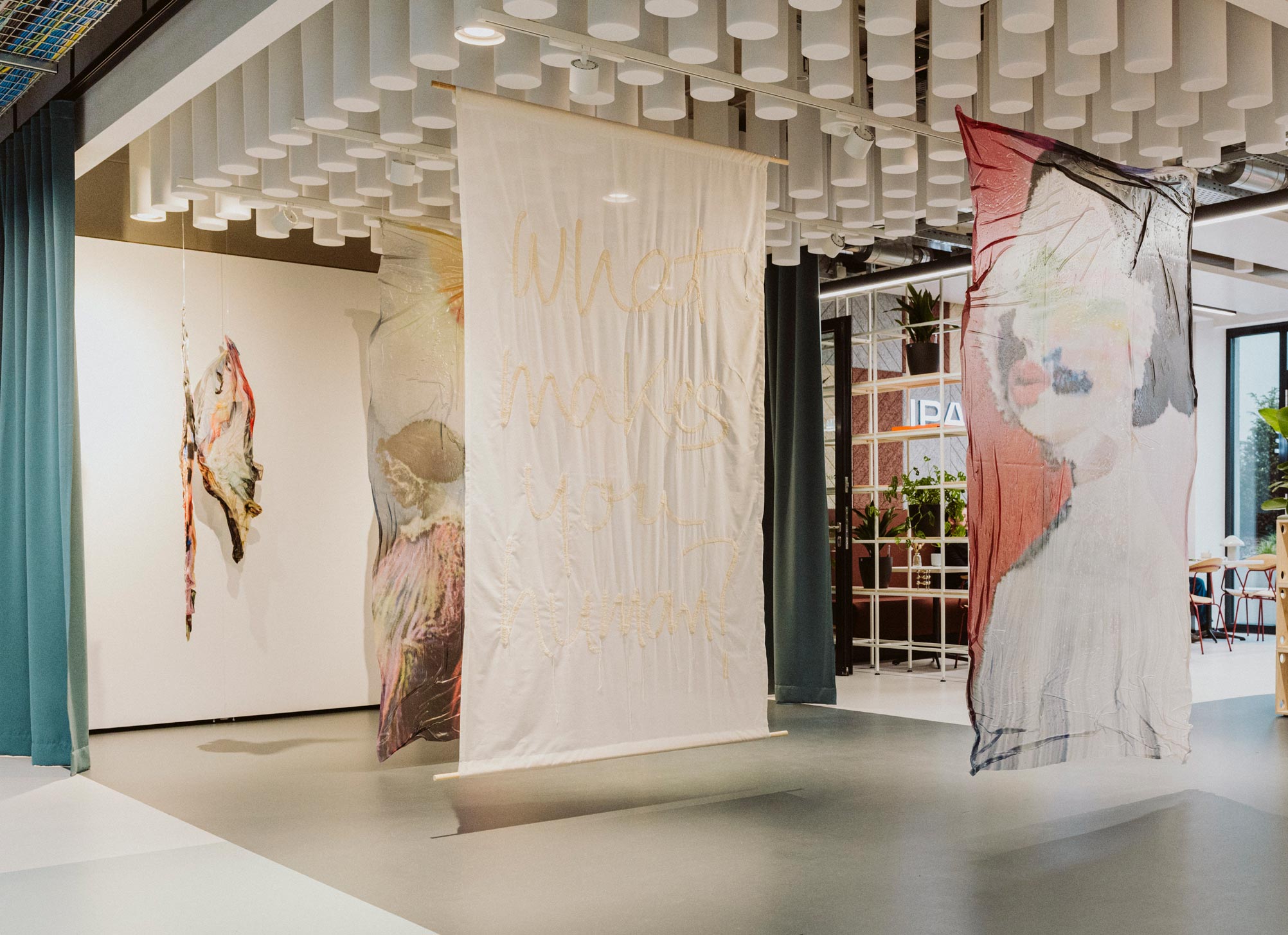
Tanja Hirschfeld has also explored the interaction between artificial intelligence and her own artistic expression. The silk panels of her installation "SIMULAKRA LABOR" are based on Hirschfeld's own series of oil paintings, which she blended together using the AI software Midjourney. Time and again, the artist had to intervene to prevent the AI from deviating from her design language and aesthetics. Hand-embroidered questions on the fabric panels ("What makes you human?") reflect Hirschfeld's thoughts on the use of artificial intelligence in the creative process.
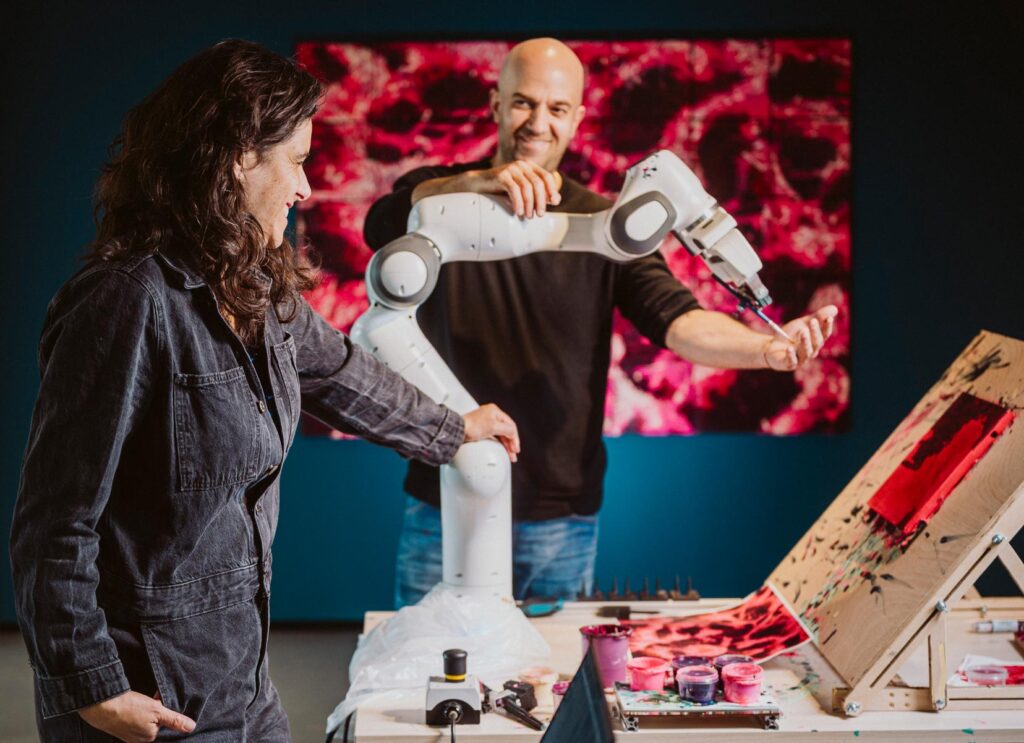
In their work "LABOR", artistic duo Liat Grayver and Daniel Berio emphasize that intelligence is not just intellectual but also physical. The title in this case refers not only to manual labor, but also to birth. In a one-week live performance, the artists created a mural from electron microscopic images of a placenta. The paintings were conceived and created by a generative AI system in collaboration with a robot – which, however, was dependent on human support. After all, a robot cannot (yet) mix colors, adjust brushes and position wooden panels as precisely as a human.
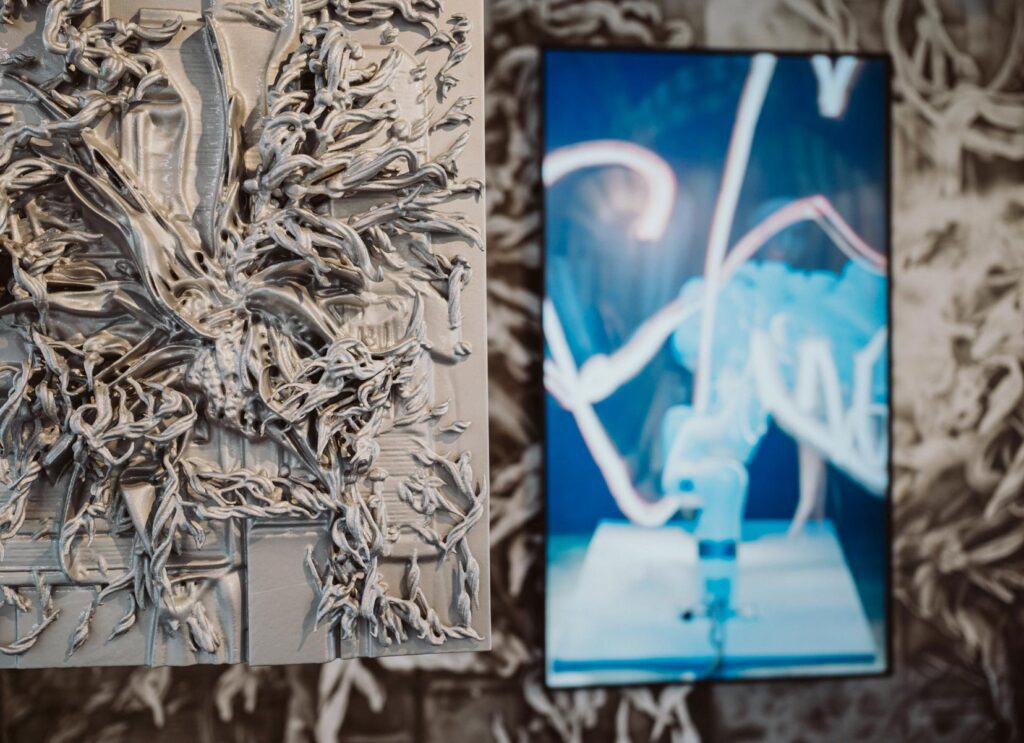
The works of Sougwen Chung are considered pioneering work at the interface of research and art in the field of human-machine collaboration. The first solo exhibition of these works in Germany was shown in 2025 at Kunstverein Heilbronn and IPAI SPACES. The sculptures and video installations presented were created in collaboration with a custom-made robotic system, which was trained by Sougwen Chung herself. The AI reacts to every movement and translates it into three-dimensional forms. This gives rise to a joint creative process between human and machine.

Similar articles

Show all

“Europe has what it takes to become a winner in the AI revolution”

IPAI is creating a new hub for European artificial intelligence in Heilbronn. The aim is to combine technological excellence with social responsibility.

read more

A No Risk Commerce Subscription

Researchers at RWTH Aachen University and TUM Campus Heilbronn have developed an online tool designed to help mechanical engineering companies offer subscription models with less risk.

read more
Pitched — and Winning

Five minutes on a stage could change everything: At the Heilbronn Slush’D startup festival, young startups competed for up to €100,000 in funding. The jury’s choices show that nothing gets done without AI.

read more
;