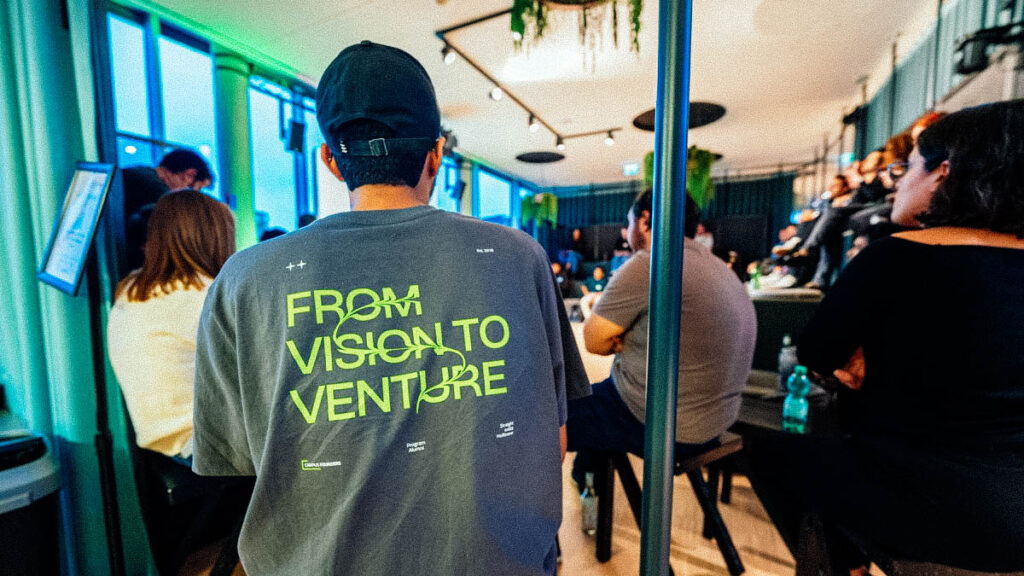
“Success attracts success”
The start-up scene thrives on new ideas – and on successful role models. Three mentors from Campus Founders describe how they support young founders with advice and practical assistance.
read more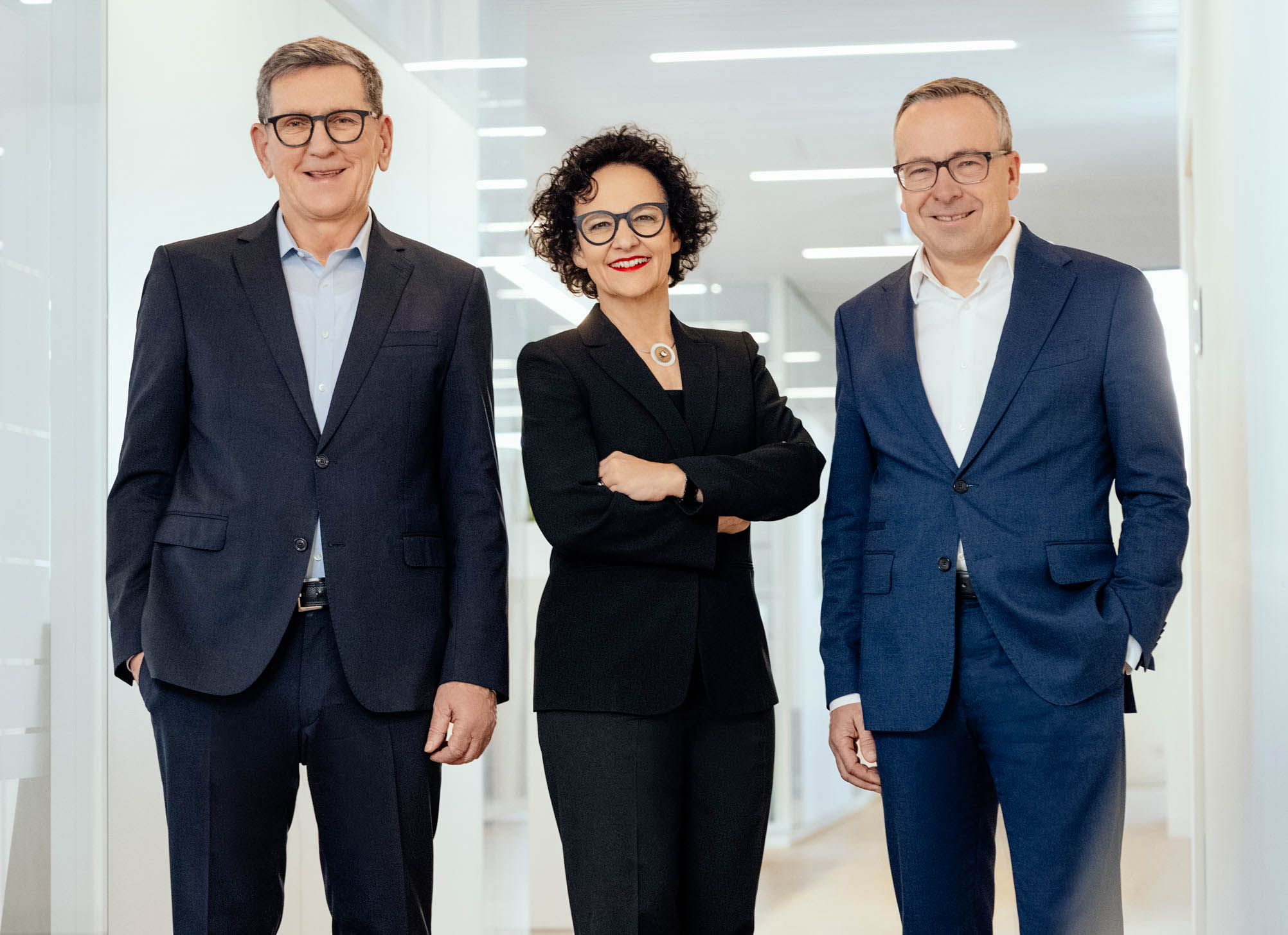
Heilbronn is becoming an internationally renowned center of innovation – through the targeted promotion and integration of education, research and entrepreneurship. We spoke to the board of directors of the Dieter Schwarz Foundation.
Professor Friedl, do you remember the moment when you were asked whether the Technical University of Munich would be interested in opening a campus in Heilbronn?
Gunther Friedl: Of course! That was in 2017, and I was dean at the Technical University of Munich at the time.
What was your reaction? After all, the Technical University of Munich is one of the world’s leading universities, but at that time Heilbronn was not yet well known in academic circles.
Friedl: I was enthusiastic right from the outset: Universities are frequently offered the opportunity to establish an endowed professorship or to fund a specific research project. But building a completely new campus, as the Dieter Schwarz Foundation intended to do, surpassed everything I could have imagined at the time, both in terms of scale and, above all, potential. You can see how passionate I was about the idea from the fact that I am now here in Heilbronn myself – as one of the managing directors of the Dieter Schwarz Foundation.
Reinhold R. Geilsdörfer: Interestingly, the critical voices came more from Heilbronn: There was already a university of applied sciences and a campus of the Baden-Württemberg Cooperative State University in the city – and there were certainly concerns that this would create new competition. But what has actually happened is what we expected from the beginning.
And what is that?
Geilsdörfer: The whole of Heilbronn is benefiting from it. In Baden-Württemberg in general, student numbers are declining – but at all universities in Heilbronn, they are increasing. We are developing the region as a whole into a beacon of excellence.
Bärbel Renner: We’re not just active in the fields of higher education and research, but start in the very early years of education, i.e. at pre-school level. These different building blocks are inextricably linked. Behind this lies an overarching goal: It takes courage to cope with the challenges and uncertainties of a changing world. Education guarantees the ability to act. And we want to motivate young people and empower them to shape the future.
Prof. Dr. Gunther Friedl is responsible for the areas of science and finance on the Foundation’s board of directors. The economist specializes in controlling in his research and was dean of the TUM School of Management before joining the Dieter Schwarz Foundation in 2025.
If we look at the field of high-tech research, the USA and China have a huge lead. Does Germany have any chance of catching up?
Geilsdörfer: Of course! We still have great opportunities, especially in the field of research, where we can compete internationally. We just can’t make the mistake of trying to keep up in all areas. For instance, no matter how many billions we invest in large-language models in the field of AI, the big US companies are ahead of us here. To be successful, we need to use our resources more wisely.
What route do you envisage for this?
Geilsdörfer: We have very valuable data in areas such as manufacturing, robotics and life sciences, where Europe has traditionally been strong. No one else has such a wealth of data – not even the US or China. We need to work with this data to build highly specialized AI for precisely these fields.
Friedl: And we will contribute to this here in Heilbronn. Our goal is to bring together top talent from all over the world with the local economy and holistic thinking. We want to network our existing strengths in these fields more closely in order to increase our competitiveness.
Geilsdörfer: It was therefore clear to us from the outset that we couldn’t simply provide broad funding, but instead needed to adopt a focused approach. For us, this focus is clearly on digitalization, with the three areas of AI, cybersecurity and now also quantum technology. Europe must maintain its sovereignty in these fields, which makes it all the more important that we conduct cutting-edge research in exactly these areas.
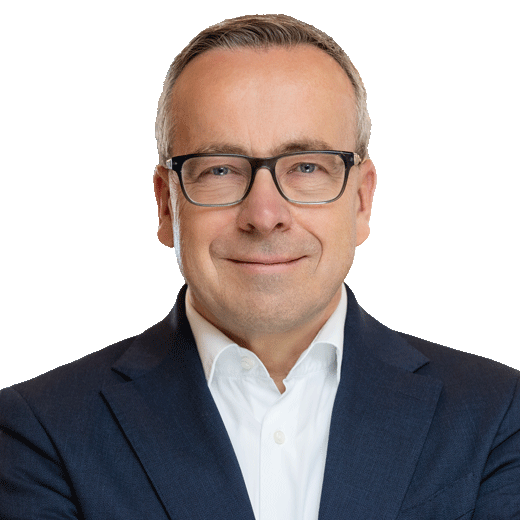
Prof. Reinhold R. Geilsdörfer is CEO of the Dieter Schwarz Foundation and member of its board of directors since 2016. The engineer bears overall responsibility for the Foundation and was president of the Baden-Württemberg Cooperative State University until his retirement.

But each of the three fields you mention is highly complex in its own right. Aren’t you overreaching by trying to be involved all three subject areas?
Friedl: The subject areas are very much intertwined. When you consider how important AI is for competitiveness and for the development of new business models, it becomes clear that it’s the central issue. It goes without saying, however, that we also have to consider the upstream and downstream parts of the value chain: For AI, we need large amounts of data that must be secure. Cybersecurity is therefore an essential partner of AI. And to process these vast data volumes, we need new technologies that enable faster computing power while still being energy efficient. This quickly leads us to quantum technologies, thus demonstrating that it’s an interconnected system, which only functions when everything works together in harmony.
Your Foundation’s portfolio ranges from early childhood education and support for start-ups to cutting-edge research. Is it even possible to adopt a consistent approach when your work covers such a wide area?
Renner: We divide our responsibilities into the three main areas of education, research and entrepreneurship – and thus map out an educational chain that encompasses lifelong learning. In answer to your question, therefore, it’s a resounding yes: We see the Foundation’s work as part of a holistic concept. The three areas complement and reinforce each other.
Do you have an example of this?
Renner: Just think of our experimenta, the largest science center in Germany: Among other things, it has an exhibition and laboratory courses on the subject of AI. And we are also creating a competence center that focuses on AI education and digitalization in schools and seeks answers to the crucial questions: How do we impart the necessary knowledge about AI in schools, and how do we make AI usable for teaching – in a way that complies with data protection rules and that is both ethically responsible and didactically sound? To this end, our experts in AI research work together with educational professionals and exhibition specialists. This creates synergies in all directions. The fact that so many specialists work together in such a small area here in Heilbronn is a prerequisite for a very special kind of innovative strength. Schools far beyond our region also benefit from the results of this collaboration, because we naturally share our findings. We hope that this will have a strong impact across the board. After all, this is also one of the concerns of our Foundation.
Friedl: This is exactly the same principle that we pursue in the field of research. We like to talk about an ecosystem in which all facilities and institutions work together. We have a campus of the Technical University of Munich here, a campus of ETH Zurich, we have nine Fraunhofer Centers from eight institutes, the Max Planck Society is represented – to name just a few. We have also established endowed professorships at numerous top universities across the globe. For us, it’s clear that only through the combination of such diverse expertise can great innovations emerge.
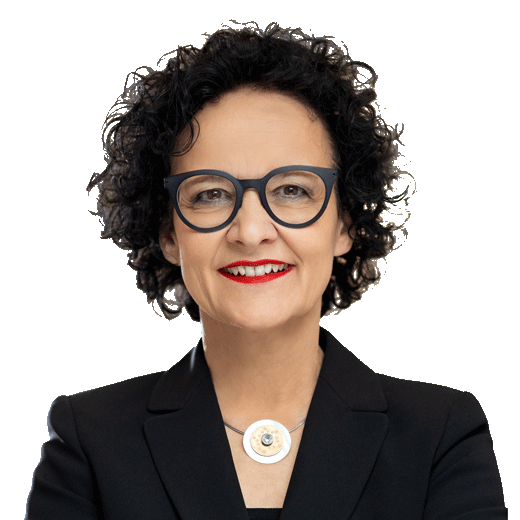
Prof. Dr. Bärbel G. Renner is responsible for education and communication on the Foundation’s board of directors. After many years in the media sector, the humanities scholar taught at the Baden-Württemberg Cooperative State University and was managing director of experimenta from 2022 until she joined the management board of the Dieter Schwarz Foundation in 2025.
The institutions you mention have locations in Heilbronn, but are independent of your Foundation. What exactly is your role in this?
Friedl: We want to create precisely this ecosystem and bring together the right stakeholders. Therefore, we first identify which components we need for this. We then provide these institutions with the right conditions – and this includes not only buildings, but also the necessary IT infrastructure, such as data centers and laboratories for chip design. Lastly, it’s about scalability: How do we move from good ideas to viable business models?
The public sector also invests a lot of money in research. Why is a private foundation needed?
Geilsdörfer: Our great advantage is that we can be more selective with our funding. We can concentrate on a few areas that we consider to be particularly important – and we don’t have to serve all federal states equally. Things aren’t quite as simple in the world of politics.
Friedl: It sometimes reminds me of a conductor: We can build an orchestra out of instruments that may otherwise not come together.
What is the prevailing spirit in your Foundation?
Renner: We have a very entrepreneurial approach: We are doers. When we identify something as right, we implement it – usually very quickly. We’re united by the will to create and shape things.
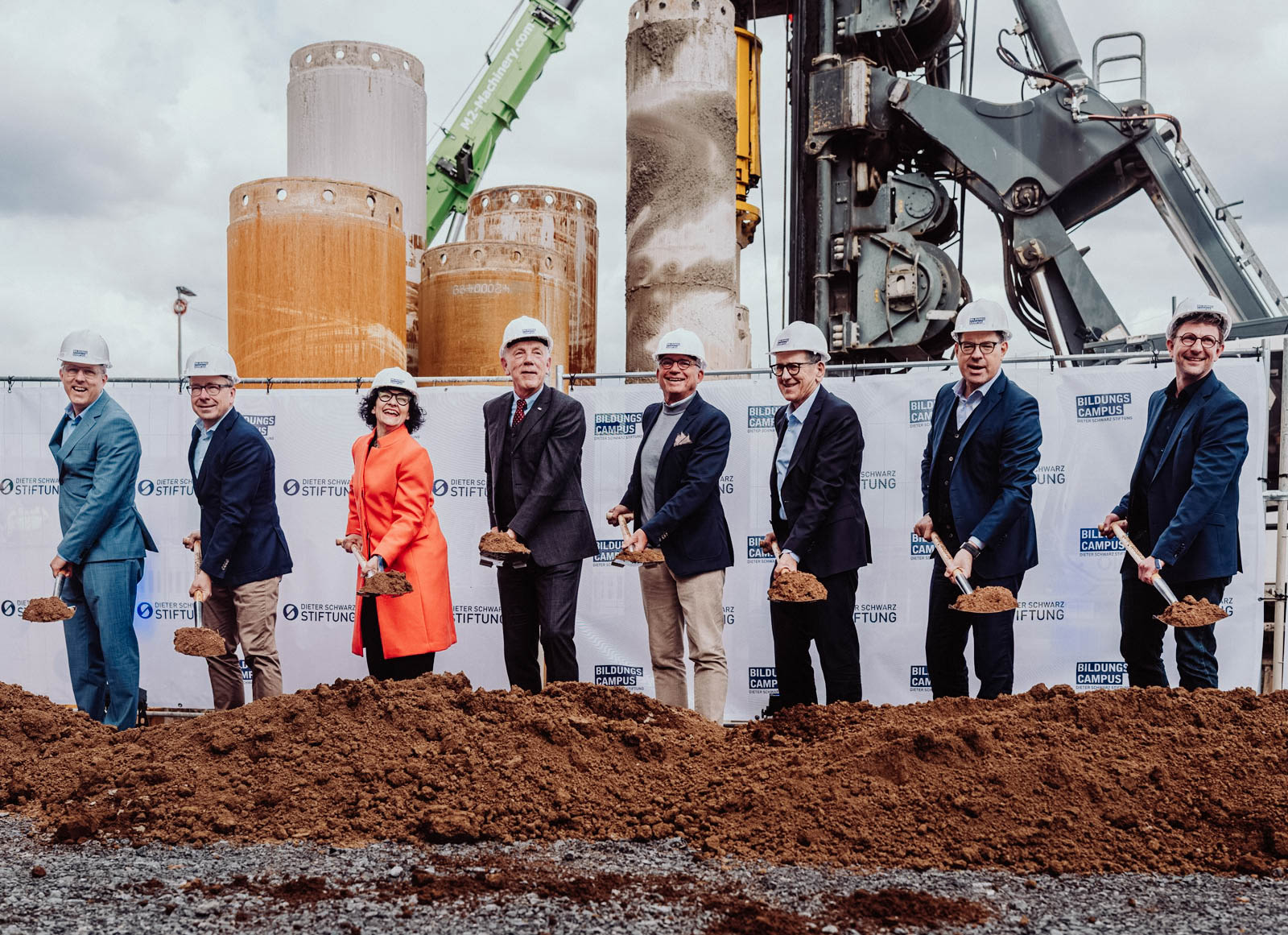
Why do you do so specifically in Heilbronn? Wouldn’t it have been easier to support and expand an existing top university?
Geilsdörfer: Firstly, our founder is from Heilbronn and wants to give something back to his city. That’s why this regional component, this local patriotism, has been a feature of our Foundation from the very beginning. Secondly, however, we’re well aware that if we want to succeed here in the region, we must reach far beyond it. We need international structures, like those we’re creating with the endowed professorships and many other measures. To answer your question: We could have done exactly the same at any other location – no matter how large and renowned the existing institutions there are. We are rooted here in the region and are strengthening it by networking on an international scale.
Renner: We succeed in attracting many international students to Heilbronn, who find fantastic study programs here. And, of course, we have a vested interest in them staying in the region after they graduate. We want them to see how economically strong we are here, and what opportunities there are. The connection of all our activities to the region and its inhabitants is also of great importance to us. We want everyone to be included.
Geilsdörfer: Our Foundation was founded on exactly this premise. The original consideration was how we could promote social cohesion. The answer is: education. The next question was what is needed for a positive development of society. The answer in this case is a prosperous economy. And education is key to this, too. All our projects share a common denominator: They ensure cohesion, competitiveness and prosperity.
Your task hasn’t become any easier in these times of such fundamental upheaval, has it?
Renner: No, but that makes it all the more important that there are institutions and people who dare to try new things. I came to Heilbronn ten years ago to help build the experimenta. At the time, it was important to me that we inspire young people with the unique way that a center for natural sciences imparts knowledge. That we encourage them and empower them for times of change. This is a core concern of our Foundation. To achieve this, we need innovative educational concepts and new formats to impart skills for the world of tomorrow. That is my vision for the Foundation.
On the subject of visions: What is your vision, Professor Friedl?
Friedl: We will soon have a thriving innovation ecosystem in Heilbronn with an impressive number of companies located at our IPAI. These companies, the start-ups and the scientific institutions are working on the topics of the future, and we are sending out a signal from Heilbronn: In Germany and Europe, we are competitive with our good ideas.
Professor Geilsdörfer, a great deal has already been achieved at the Foundation. Can there be much more to come?
Geilsdörfer: Very much so, yes! We are only at the beginning of a great journey. We definitely want to maintain the momentum of recent years. I have one wish above all else: that there will be hundreds of initiatives in Germany like the one we are building right here. That is what will take our country into the future.
The start-up scene thrives on new ideas – and on successful role models. Three mentors from Campus Founders describe how they support young founders with advice and practical assistance.
read more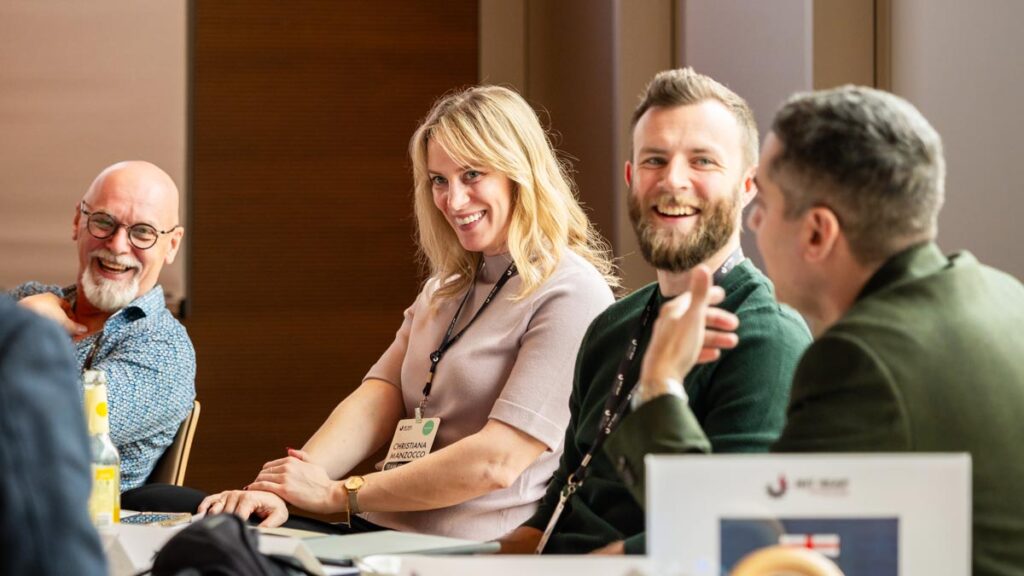
The Heilbronn-Franken region has the ideal prerequisites for becoming a global AI hub. The MIT REAP program supports all stakeholders in seizing this opportunity.
read more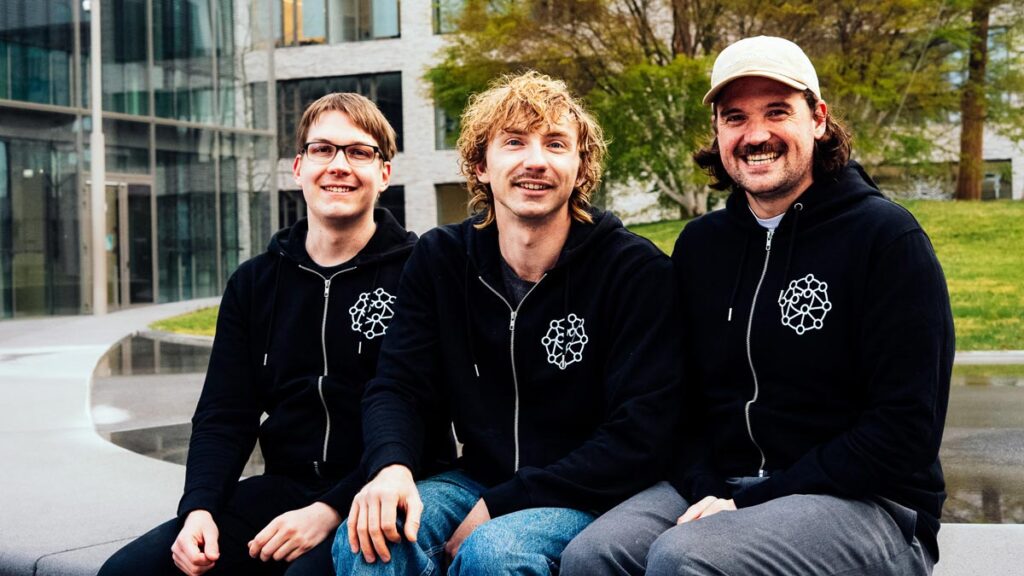
Students at DHBW have launched a start-up. Their goal: using AI to support social work organizations. Their biggest challenge: data protection.
read more