Skip to content

“Success attracts success”

The start-up scene thrives on new ideas – and on successful role models. Three mentors from Campus Founders describe how they support young founders with advice and practical assistance.

18.03.2026
Philipp Nagels

T

They are a huge support for young founders: people who have already led their companies to great success and can offer valuable advice to the next generation. This is the idea behind the “flywheel” principle: seasoned start-up players share their knowledge with those who are still inexperienced, promote ideas and pave the way for young entrepreneurs. They, in turn, become mentors to the next generation. This creates a sustainable cycle of innovation.

Three mentors explain how they share their wealth of experience with the next generation of young entrepreneurs.

Lisa Gradow is a lawyer, serial founder and start-up investor, who became an entrepreneur at the age of 17. Her consent management platform Usercentrics generates more than 100 million euros in annual revenue. She believes the German start-up scene is currently on the right track – not least because more and more ecosystems are forming.

"For me, mentoring is primarily about coaching, not lecturing."

“I live in Munich, but am originally from Heilbronn, and I always say: if Campus Founders had existed when I graduated from high school, I would never have moved away. Today I’m a speaker at events there myself, and I’ve also been working as a mentor since early summer. I am particularly well placed to support founders in legal and compliance issues and fundraising, as I have a lot of experience in these areas, including internationally.

For me, mentoring is primarily about coaching, not lecturing. I don’t just jump in and dissect everything. The teams have to develop their own sense of entrepreneurship and find their own solutions to problems. I support them along this path. On the one hand, starting a business is easier today than it was ten years ago, because there are many more resources available: programs, pitch decks, testimonials from successful founders and AI that speeds up research. At the same time, getting the necessary funding is currently more difficult than it was a few years ago: In addition to a functioning product, investors also expect to see initial customers and first sales before they invest themselves.

I appreciate the experience of stepping out of my day-to-day business and seeing young people who want to conquer the world. Every beginning has its own magic, especially if you haven’t experienced much rejection yet or heard “no” too often. As a mentor, you mustn’t stifle that or try too hard to impose your own experiences. Markets change incredibly quickly. My motto, therefore, is to listen and ask the right questions.”

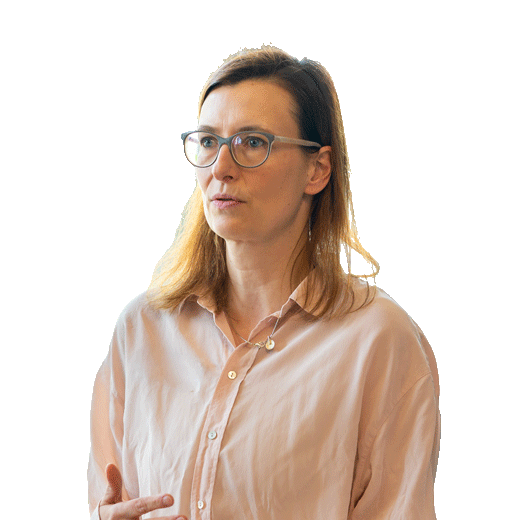
Tobias Rieker is an engineer and founder of the software start-up MARKT-PILOT. He has raised more than 50 million euros in venture capital and invested in more than 15 start-ups himself. He would like to see a culture in Germany that is more accepting of failure and unconventional CVs.

"As a mentor, I set guidelines for sparring, but I don't make any decisions."

“I’ve been mentoring start-ups for around four years, mainly in Heilbronn and Stuttgart. This is a matter close to my heart, because I myself received a great deal of support from Campus Founders, and I would like to give something back. I currently mentor four start-up teams on a weekly basis. The focus is primarily on go-to-market topics and strategic matters, and that’s where I have the most experience – from pre-revenue start-ups with zero turnover to those with Series A funding or eight-figure recurring revenues.

The teams bring their current questions to the mentoring sessions, and together we consider what is important and urgent. We address this directly in the session. What is important but not urgent, or what is urgent but less important? We can deal with that later. And unimportant, non-urgent issues are simply eliminated. I’ve also developed a toolbox for go-to-market topics. If, for example, the benefits of a product aren’t clearly communicated to customers, we explore this together in greater depth. As a mentor, I set the guidelines for sparring, but I don’t make any decisions.

In my experience, many teams start up too quickly. I’m a big fan of the “turn-the-tables method”: prove to yourself why the company will fail in six months. If can you refute this – great! And if not, you’ll save time, money and heartache. Many founders are utterly convinced of their ideas, but it takes true greatness to look in the mirror neutrally and objectively and ask yourself honestly: is this a good idea that can work? Founding a business also means having courage.”

Christine Rittner is a supervisory board member, interim manager, business angel and mentor. She worked for around 20 years in a large corporation, including as CEO and CHRO in the Schwarz Group. Rittner believes that entrepreneurship should be fostered in schools.

Christine Rittner

"The founders then realize: we can and must think bigger."

“I ended my corporate career in 2020 and looked at the key figures for start-ups in Germany: 20 percent are women, and just 1.5 percent of the capital goes to all-female teams. I thought to myself: it can’t be that we women aren’t just as good at starting businesses as men. That’s why I became a mentor.

I support female founders in the early stages, including at Campus Founders in Heilbronn. I do around 80 mentoring sessions per year and organize a female founders event three to four times a year. When I started in April 2023, there were about 30 female founders at Campus Founders – today there are more than 150. That’s really great to see. Mentoring also benefits me personally: I’m constantly learning about new trends, AI and consumer behavior.

About Campus Founders

Campus Founders is the start-up and co-innovation hub in Heilbronn. Nine different programs support founders in everything from the initial idea development and validation to market readiness and sustainable scaling. The programs combine practical experience, advanced methods, financial start-up aid along with a pool of mentors and an international network. Campus Founders is funded by the Dieter Schwarz Foundation. The Foundation provides comprehensive support for the start-up culture in Heilbronn and invests in the further development of the local innovation ecosystem.

The best ideas often emerge from direct exchange. I ask: where do you want to be in five years? And what would the path to get there look like if money were no object? The founders then realize: we can and must think bigger. My goal is to give them confidence and empower them to keep going. Female founders in particular often underestimate themselves and want to do everything perfectly. I’m convinced that we should think beyond Baden-Württemberg and Germany. We need to produce more large start-ups here in Germany – including those founded by women. Success attracts success; diversity attracts diversity.”

Share article

Similar articles

Show all

“The learning concept is brilliant because it’s so practical”

No teachers, no lectures, just project work: the 42 Heilbronn coding school is training the programmers of tomorrow. Two students and their managing director share their experiences.

read more

“Europe has what it takes to become a winner in the AI revolution”

IPAI is creating a new hub for European artificial intelligence in Heilbronn. The aim is to combine technological excellence with social responsibility.

read more

Pitched — and Winning

Five minutes on a stage could change everything: At the Heilbronn Slush’D startup festival, young startups competed for up to €100,000 in funding. The jury’s choices show that nothing gets done without AI.

read more
;